
Batt vs Roll Insulation: Which is Right For Your Home
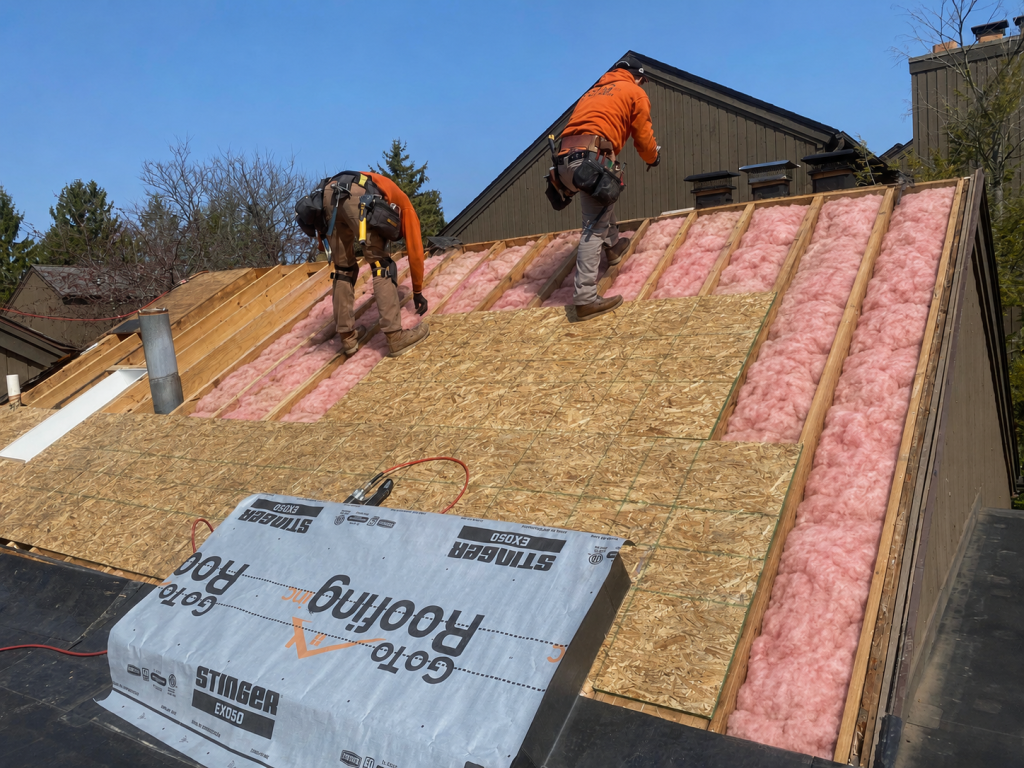
Short Answer: Batt and roll insulation are usually made from the same material, like fiberglass or mineral wool, but they come in different shapes. Batt insulation comes in pre-cut panels sized to fit between standard wall studs and ceiling joists. Roll insulation comes in long continuous rolls that you cut to length. Batts work best for standard framing and tight spaces, while rolls cover large open areas like an attic floor more quickly. For most homes, the right choice comes down to where you are insulating and how much cutting you want to do.
If you are planning a home insulation project, you have probably noticed that fiberglass insulation shows up in two forms at the store: batts and rolls. They look almost identical once they are installed, and both do the same basic job of slowing heat from moving in and out of your home. The difference is mostly about format, and picking the right one can save you time, reduce waste, and help you get better energy savings.
This guide breaks down batt vs roll insulation in plain terms so you can make an informed decision for your attic, walls, or crawl spaces.
What is Batt Insulation?
Batt insulation is a type of blanket insulation that comes in pre-cut panels, usually 4 or 8 feet long. Each batt is sized to fit the standard spacing between wall studs and ceiling joists, which is why you often hear it described as fitting a 16-inch or 24-inch cavity.
Most insulation batts are made from fiberglass, though mineral wool batt options are also common. A fiberglass batt is lightweight and easy to carry, and because the pieces are already cut, you can drop them into place fast in framed walls.
Batts come in two versions:
- Faced insulation: Has a paper or foil backing that acts as a vapor retarder. Kraft-faced insulation is the most common, with a paper layer that helps with moisture control on the warm side of a wall.
- Unfaced insulation: Has no backing. Unfaced insulation is a good pick when you are adding new insulation over old insulation, or when a separate vapor barrier is already in place.
What is Roll Insulation?
Roll insulation, sometimes called rolled insulation, is the same blanket-style insulation material sold in long continuous rolls instead of pre-cut pieces. An insulation roll can run 20 feet or longer, and you cut it to the length you need on the job.
Like batts, an insulation roll is usually fiberglass insulation, and it comes in faced and unfaced versions. Because the material arrives in one long strip, roll insulation works well in large open areas where you want fewer seams and less stopping to grab another piece.
Batt vs Roll Insulation: The Main Differences
The main difference between the two is format. Batts are pre-cut; rolls are continuous. That one detail changes how each performs in different parts of your home.
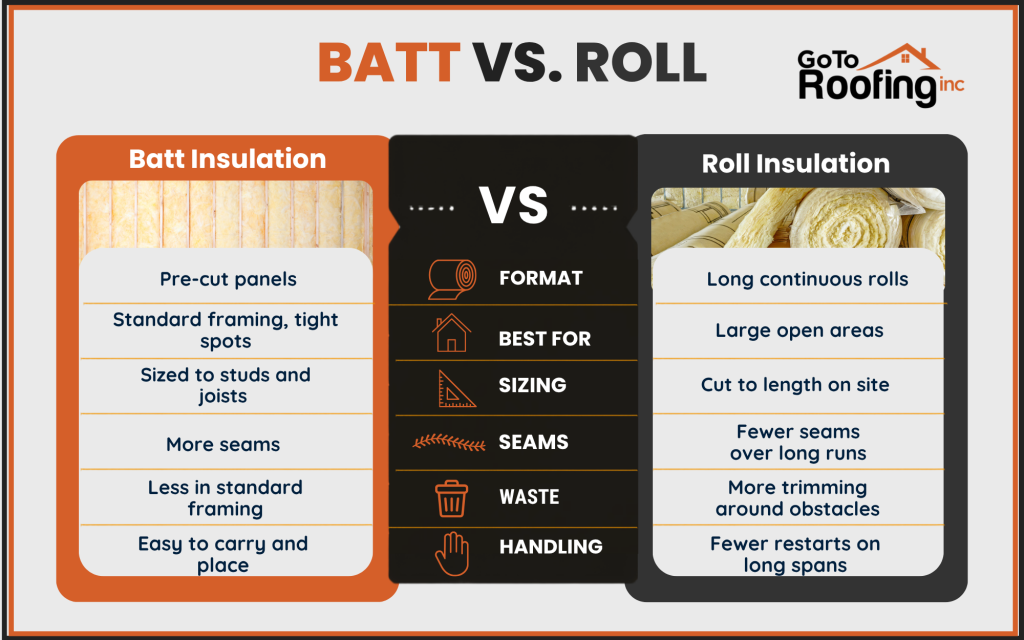
Both types offer similar thermal resistance at the same thickness and R-value, so neither one insulates better by default. The right insulation type depends on the space you are working in.
R-Value: How Much Insulation Do You Need?
R-value measures thermal resistance, or how well the material slows heat flow. A higher R-value means more thermal insulation and a stronger thermal barrier between your living space and the outdoors.
Both batt and roll insulation are labeled with an R-value based on thickness. Common target ranges include:
- Walls: R-13 to R-21
- Attic floor: R-38 to R-60 in cold climates
- Crawl spaces: R-19 to R-30
Around Ann Arbor and the rest of Michigan, attic insulation usually needs to reach R-49 or higher to hold up through cold winters. Whether you use batts or rolls, matching the right R-value for each area is what drives real energy savings. If your old insulation has settled or thinned over the years, adding a new layer on top can bring the total R-value back up.
Faced vs Unfaced: The Vapor Barrier Question
Both batt and roll insulation come faced or unfaced, and this choice matters more than batt vs roll when it comes to moisture control.
A vapor retarder or vapor barrier slows moisture from moving into your wall or ceiling, where it could cause mold or wet insulation. Here is a simple way to think about it:
- Use faced insulation, like kraft-faced insulation, for new walls, an exterior wall, or the first layer in an attic, with the facing toward the warm side of the room.
- Use unfaced insulation when you are laying a second layer over existing insulation, since doubling up vapor barriers can trap moisture.
Getting the facing right supports good air sealing and keeps your insulation working the way it should.
Choosing the Right Insulation for Each Space
Regular maintenance does not need to be complicated. Consistent seasonal checks can help homeowners catch minor issues before they become major repairs.
Signs Your Roof Needs Professional Help
While some roof maintenance tasks can be handled by homeowners, certain warning signs require a professional inspection. Issues like active leaks, storm damage, and missing shingles can compromise your roof’s ability to protect your home and may lead to more extensive repairs if they are ignored.
Attic Insulation
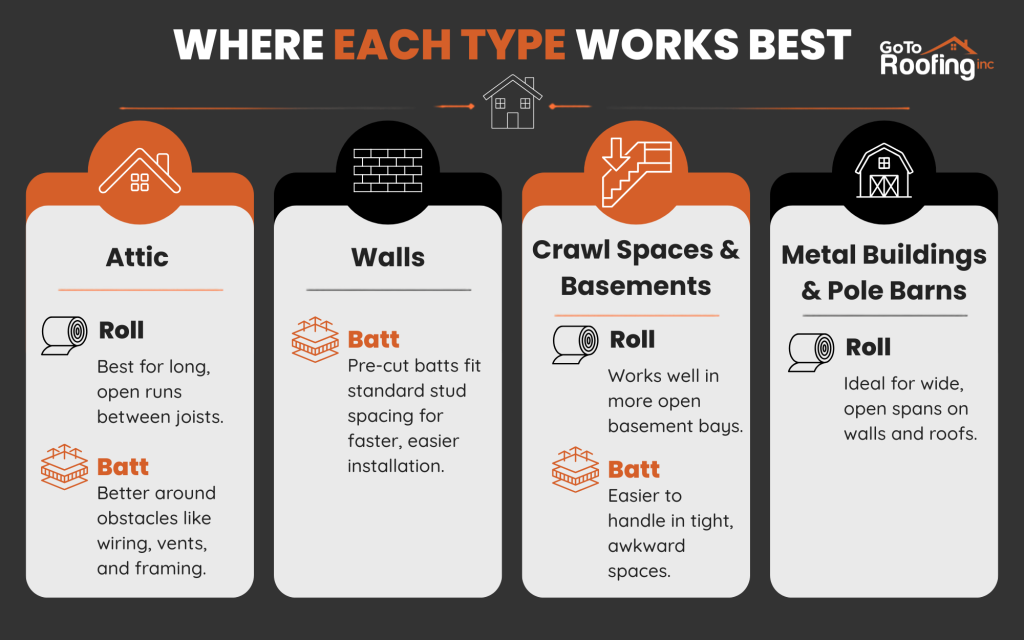
For an attic floor with long, open runs between joists, roll insulation is often faster because you unroll it in one pass. If your attic has lots of obstacles, like wiring, vents, and framing, batts can be easier to fit around them. Many attics end up using a mix of both. Insulation also works best when it is paired with good airflow, so it helps to understand roof ventilation before you add more to the attic floor.
Walls
Inside walls, batt insulation is usually the better fit. The pre-cut sizes line up with standard wall stud spacing, so you spend less time measuring and cutting. This makes fiberglass batt insulation a popular choice for framed exterior walls.
Crawl Spaces and Basements
Crawl spaces are tight and awkward, so shorter, pre-cut batts are easier to handle in cramped spots. In more open basement bays, either type works fine.
Metal Buildings and Pole Barns
For a metal building or pole barn with long wall and roof spans, roll insulation is the go-to. The continuous rolls stretch across wide, open areas with fewer seams, which helps with both coverage and a cleaner finished look.
Batt and Roll vs Other Insulation Types
Batts and rolls are not your only options. Depending on the space, another insulation material may fit better.
Blown-In (Loose-Fill) Insulation
Blown-in insulation, also called loose-fill insulation, is made of small pieces of fiberglass or cellulose blown into place with a machine. It fills irregular spaces and gaps that batts and rolls can miss, which makes it a strong pick for topping off an existing attic.
Spray Foam Insulation
Spray foam insulation goes on as a liquid and expands to seal gaps. Foam insulation gives high thermal resistance and doubles as air sealing, though it costs more than fiberglass. Spray foam works well in odd-shaped or hard-to-reach areas.
Mineral Wool
Mineral wool, available as a mineral wool batt, resists fire and dampens sound better than standard fiberglass. It costs more but is a solid option for interior walls and areas near heat sources.

How to Choose Between Batt and Roll
For most homes, the decision is simple:
- Pick batt insulation for standard framing, walls, tight crawl spaces, and areas with lots of obstacles.
- Pick roll insulation for large open areas, long attic floor runs, metal buildings, and pole barns.
Cost per square foot is close between the two, so let the space guide you. If you are unsure how much insulation you need or which R-value fits your climate, a local contractor can measure your home and point you toward the right setup.
Protect Your Home With the Right Insulation
Choosing between batt and roll insulation comes down to where you are working and how the space is built. Both use the same material and offer the same thermal barrier at a given R-value, so the winner is whichever one fits your project with less waste and less hassle.
At GoTo Roofing, we help homeowners in Ann Arbor and the surrounding communities with attic insulation and ventilation, plus the roofing, siding, and window work that keeps a home comfortable year-round. We stay hands-on from start to finish, explain your options in plain language, and stand behind our work with quality materials and clear communication. Contact us today for a free estimate and straightforward advice on the best insulation for your home.
Copyright © 2026 WebLocal, Inc.