
The Hidden Dangers of Ignoring A roof Leak

Short Answer: What starts as a water stain on the ceiling can quietly turn into mold, structural damage, and ruined insulation before most homeowners realize the roof is leaking at all. Water doesn’t stay where it enters. It travels along rafters, soaks into the roof deck, and works its way into walls and ceilings long before the damage becomes visible. The moment you spot a water stain, a musty smell, or missing shingles, that’s your signal to act. The longer a roof leak goes unaddressed, the more it costs to fix.
Ignoring a roof leak is a lot like ignoring a slow pipe leak under your sink. Small, easy to dismiss, and quietly getting worse. This guide covers how to spot a leak early, what happens when you wait, and how to prevent the problem from coming back.
Early Signs Your Roof Is Leaking

A roof leak rarely announces itself all at once. More often, it gives you a trail of small clues before things get serious. Knowing what to look for can save you from a much bigger headache down the road.
Inside Your Home
- Water stains on the ceiling: Brown or yellow rings spreading across ceiling panels are one of the most common signs of an active or recent roof leak.
- Water stains running down walls: When water travels along rafters or framing before dripping, it can appear on interior walls far from the actual entry point.
- Musty or moldy odors: A persistent damp smell in a room that isn’t near a bathroom or kitchen usually means moisture is hiding somewhere above.
- Mold or mildew on ceilings or upper walls: Visible dark spots away from moisture-prone areas point to a water leak coming from above.
- Peeling or bubbling interior paint: Moisture pushing through the wall or ceiling from a leaky roof will cause paint to lift, blister, or peel.
Outside Your Home
- Missing or damaged shingles: Gaps in your shingle coverage give rain a direct path into the roof deck.
- Spots or discoloration on exterior walls: Persistent staining or streaking below the roofline, around windows, or where the roof meets a sidewall points to water escaping past flashing or gutters and tracking down the siding. Unlike normal rain, these marks stay visible after the wall dries.
- Cracked flashing around chimneys, vents, or skylights: Flashing is the metal seal around roof penetrations. When it cracks or pulls away, water gets in.
Spotting these signs early makes a big difference. The sooner you address a roof leak, the more you limit the damage.
What Happens When You Ignore a Roof Leak
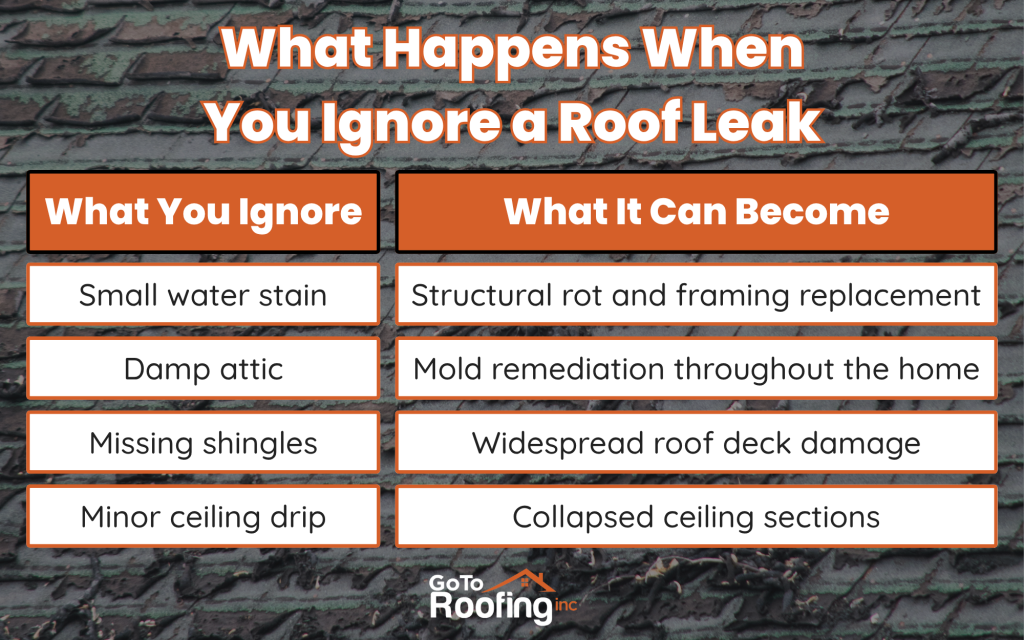
A small drip might not seem urgent, but left alone, a roof leak has a way of quietly becoming a much bigger problem. Here’s what can happen when a leaking roof goes unaddressed.
Attic and Insulation Damage
Water entering through the roof often hits the attic first. Once attic insulation gets soaked, it loses its ability to regulate your home’s temperature. That leads directly to higher heating and cooling costs, and replacing wet insulation adds another expense on top of the roof repair itself.
Warm air rising from your living space also interacts with moisture in a cold attic, which can create condensation problems that compound the damage over time.
Higher Energy Bills
A wet, compressed, or missing section of attic insulation means your HVAC system has to work harder to maintain temperature. You might not connect rising energy bills to a roof issue right away, but the two can be directly related.
The pattern is consistent: a small, manageable fix becomes a major, expensive repair when a leaky roof goes unaddressed.
Mold and Mildew Growth
Mold doesn’t need much to get started. A damp spot in the attic or behind drywall is enough. Once mold takes hold, it spreads quickly. It can get into your HVAC system and circulate through the entire home, creating health risks particularly for anyone with respiratory conditions. Mold remediation can be costly and time-consuming, and it all traces back to the original roof leak that wasn’t addressed.
Structural Damage
Prolonged water exposure weakens wood. Roof rafters, ceiling joists, and wall framing can all absorb moisture over time, leading to rot that compromises the structural integrity of your home. What starts as a small ceiling stain can eventually require tearing back sections of the roof deck or walls to replace damaged framing. By that point, what could have been a simple repair has turned into a much larger and more expensive project.
Common Causes of Roof Leaks
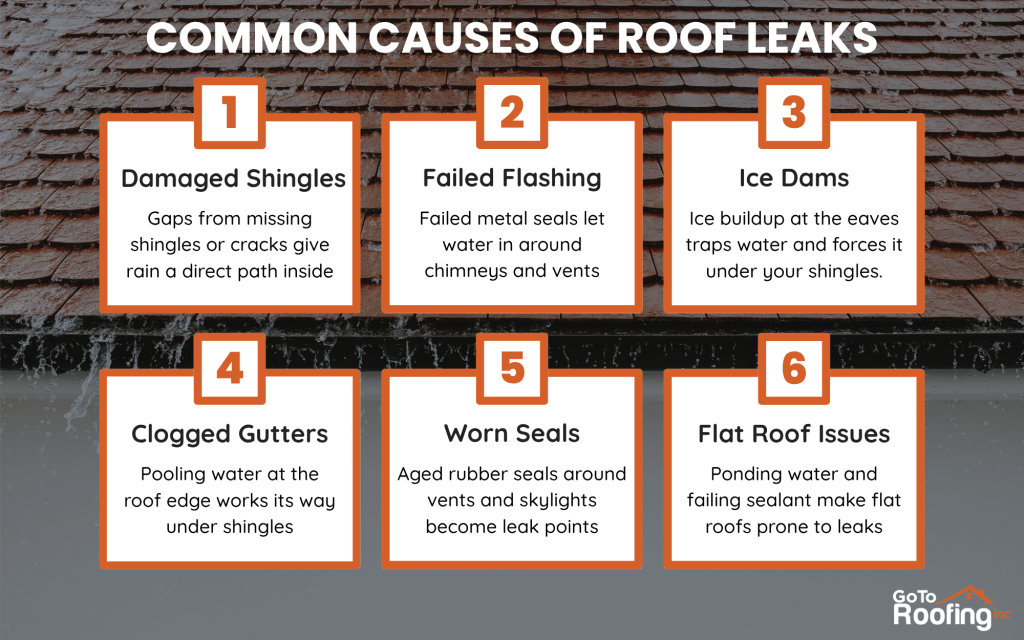
Understanding what causes a roof leak in the first place helps you know where to look and what to tell a contractor.
Missing or Damaged Shingles
Shingles take a beating from heavy rain, high winds, and temperature swings. When shingles crack, curl, or go missing entirely, rain has a direct path into the roof deck. After any significant storm, it’s worth scanning your roofline for obvious gaps or shifted shingles.
Cracked or Failing Flashing
Flashing is the metal material used to seal the joints around chimneys, skylights, vents, and roof valleys. Over time, flashing can crack, separate, or corrode. When it fails, water follows the gap straight in. This is one of the most common sources of roof leaks, especially on older roofs.
Ice Dams
In Michigan winters, ice dams are a real concern. When warm air from the attic heats the roof deck unevenly, snow melts at the top and refreezes at the cold eave edge. This creates a ridge of ice that backs water up under the shingles. Regular inspections before and after winter can help catch ice dam damage early.
Clogged Gutters
Gutters that aren’t cleaned regularly can cause water to pool along the roof edge rather than drain away. That pooling water finds its way under shingles or into seams over time.
Worn Seals Around Roof Penetrations
Any place where something passes through your roof, such as a vent pipe, skylight, or ridge vent, is a potential leak point. The rubber seal or flashing around these penetrations breaks down with age and UV exposure.
Understanding what causes a roof leak in the first place helps you know where to look and what to tell a contractor.
Flat Roof Issues
Flat roofs require special attention. Without a steep pitch to shed water naturally, ponding becomes a risk. A flat roof with aging sealant or a failing pitch pan around a penetration can develop leaks that are harder to trace than those on a sloped roof.
DIY Repair vs. Calling a Professional
When you find a roof leak, you’ll face a decision: handle it yourself or bring in a professional. Here’s a realistic look at both.
When DIY Makes Sense
For a truly minor issue, like resealing a small area around a vent or replacing one or two missing shingles you can safely access, a confident DIYer may be able to make the repair themselves. Using sealant to close a small gap or reattaching a lifted shingle can be within reach if the damage is isolated and you’re comfortable working on a roof.
The risk: If you apply sealant over a problem without identifying the actual source, or if the damage is larger than it appears, you’re likely just delaying the same repair while water continues to work inward. It’s easy to partially miss the source of a water leak and end up with the same problem a season later.
When to Call a Professional
Roof leaks are best handled by a contractor. A trained inspector can trace the actual entry point, which is often not directly above the water stain you see inside. They can identify cracked flashing, failing seals, compromised roofing materials, or deck damage that isn’t visible from the ground. They also have the right equipment to work safely at height.
If you’re unsure about the source of the leak, if water damage is already visible in the attic or on the ceiling, or if shingles are missing across a larger area, skip the DIY route and contact a roofing professional.

How to Prevent Future Roof Leaks
Regular inspections and basic maintenance go a long way toward keeping a leaking roof from becoming a recurring problem.
Schedule Regular Inspections
Inspect your roof at least twice a year: once in the spring to catch any damage from the winter, and once in the fall before the next cold season sets in. Look for missing shingles, damaged flashing, and any debris collecting in valleys or around penetrations. If climbing up isn’t something you’re comfortable with, a professional roof inspection is a smart investment.
Keep Gutters Clean
Clean gutters and downspouts before the rainy season and before winter. Clogged gutters force water to back up along the roof edge, which accelerates wear and can work its way under shingles or along the fascia.
Trim Overhanging Branches
Branches rubbing against your roof during wind strip away the granules on asphalt shingles, shortening their lifespan. Organic debris like wet leaves that pile up on the roof accelerates decay and creates conditions for moss and algae growth. Trim branches back so they clear the roofline by at least a few feet.
Check Your Attic
Your attic is often the first place a roof leak shows up. During your spring and fall checks, look for water stains on the decking, wet or compressed insulation, or any daylight showing through the roof structure. Make sure your ridge vent and soffit vents aren’t blocked; proper ventilation helps prevent the moisture buildup that leads to condensation and damage from the inside out.
Address Small Problems Quickly
A small water stain, a cracked seal, or a single missing shingle all become bigger problems if ignored through another winter or rainy season. The next step when you spot something should always be to get it assessed, not wait and see.
When Your Insurance May Cover Roof Leak Damage
A roof leak caused by a sudden event, like storm damage from heavy rain, wind, or hail, is often considered a covered peril under a standard homeowners insurance policy. However, damage from neglect or wear and tear typically is not covered.
A few things to keep in mind:
- Document the damage as soon as you spot it. Photos and dates matter when working with an insurance company.
- Contact your homeowners insurance provider early in the process to understand what your policy covers before making repairs.
- A claims adjuster may need to inspect the damage before repairs are approved or reimbursed.
- Previous owners may have had repairs done that weren’t disclosed. If you’re in a newer-to-you home with a recurring leak, it’s worth having a full inspection to rule out pre-existing problems.
If you have a homeowners insurance policy, check your coverage before assuming a roof repair is fully out of pocket. In many cases, storm-related damage that leads to a roof leak qualifies as a covered claim.
Protect Your Roof Before It Becomes a Problem
A leaking roof doesn’t fix itself. The damage accumulates quietly, behind walls and under insulation, until what started as a water stain becomes a structural repair. Staying proactive with regular inspections, gutter maintenance, and quick attention to early warning signs keeps small issues from growing into major ones.
At GoTo Roofing, we serve homeowners in Ann Arbor and the surrounding communities with roofing repairs and replacements, attic insulation and ventilation, gutters, siding, and windows. Our team stays on-site from start to finish, so you always know who’s handling the work and what’s happening next. We use American-made, quality-guaranteed materials and stand behind everything we install.
If you’ve spotted a water stain, missing shingles, or any of the other signs covered in this guide, don’t wait. Contact GoTo Roofing today for a free estimate.
Copyright © 2026 WebLocal, Inc.