
Fall Roof Maintenance: How to Prepare for Harsh Winter Weather

Short Answer: Fall is the best time to prepare a roof for harsh weather conditions. That means scheduling a roof inspection, cleaning gutters, checking attic insulation and ventilation, and confirming flashing still holds a watertight seal. Catching minor issues now, while repairs are still easy to make, protects your roof’s lifespan and helps you avoid a costly repair once winter weather arrives.
At GoTo Roofing, we walk Ann Arbor homeowners through this every year. A little regular maintenance in September and October protects your roof’s lifespan, keeps energy bills in check, and helps you avoid a costly repair once the temperature drops.
Why Fall Roof Maintenance Matters
Michigan sits right in the path of lake-effect snow, sudden temperature fluctuations, and the freeze-thaw cycles that wear down roofing material faster than a milder climate would. Southeast Michigan communities like Ann Arbor typically see multiple feet of snow accumulate over a winter season, and that weight, combined with ice and wind, tests every seam, shingle, and vent on your roof. Following a simple maintenance checklist can protect your home from unexpected and costly repairs.
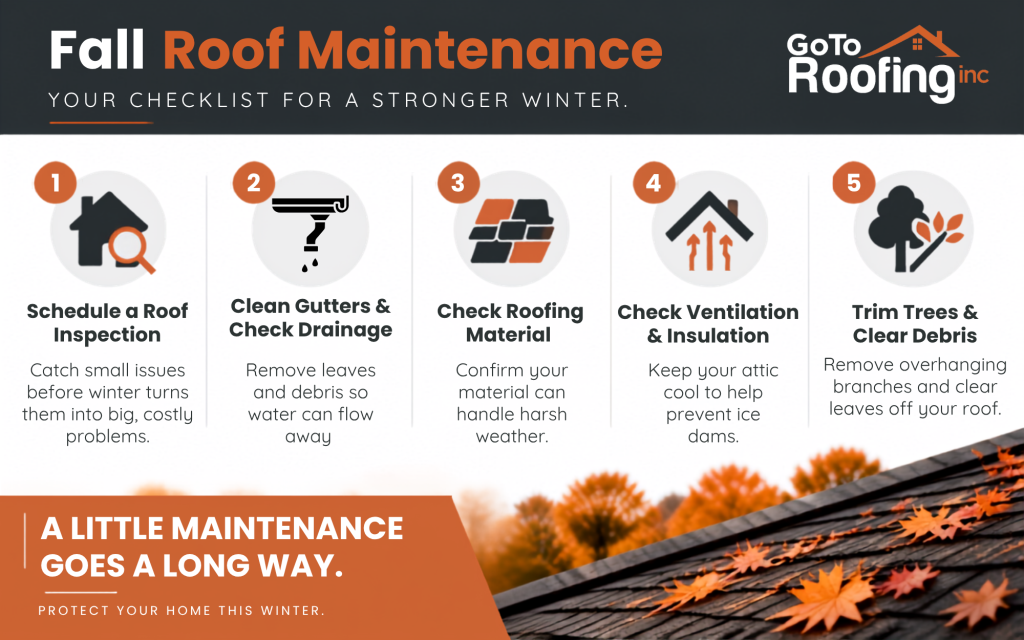
Fall roof maintenance gives you a chance to find and fix minor issues while the weather still allows for repairs. A missing shingle or a small gap around a vent pipe is a quick fix in October. That same issue, left alone through a Michigan winter, can turn into water damage, a damaged roof deck, or structural issues that cost far more to correct.
Schedule a Regular Roof Inspection
The single best thing you can do before winter weather arrives is schedule a roof inspection. A trained eye catches potential damage that is easy to miss from the ground, including:
- Cracked, curling, or missing shingles
- Loose or damaged flashing around chimneys and vents
- Soft spots or sagging on the roof deck
- Signs of moisture buildup in the attic
- Gaps or wear around skylights and pipe boots
Regular inspections are worth scheduling every fall and after any severe weather event throughout the year. Catching a small problem now is far cheaper than dealing with a full roof repair after a winter storm makes it worse.
Clean Gutters and Check Drainage
Proper drainage keeps water moving off your roof instead of pooling at the edges or backing up under your shingles. Clogged gutters are one of the most common causes of winter roof problems in Michigan, because trapped water freezes and expands, pulling gutters loose and putting pressure on your fascia and your home’s structural integrity.
Before winter months arrive, clear leaves and debris from your gutters and downspouts, and confirm that water drains at least several feet away from your foundation. If your gutters are sagging, pulling away from the fascia, or showing rust, fall is the time to have them repaired or replaced.
Choose Roofing Material Built for Harsh Weather
Not every roofing material handles extreme weather conditions the same way.
- Asphalt shingles remain the most common roofing material for Michigan homes, offering solid weather resistance and a reasonable cost when installed correctly.
- Metal roofing sheds snow and ice quickly and holds up well against high winds, which makes it a strong option for homeowners looking for a longer-term investment.
- A flat roof or other low-slope system needs extra attention to drainage and insulation, since standing water and ice are more likely to collect.
- Composite roofing offers another route for homeowners who want the look of wood or slate with better resistance to Michigan’s extreme temperatures.
Whatever roofing material is currently on your home, fall is the season to confirm it is holding up and ready for the freezing temperatures ahead.
Prevent Ice Dams With Proper Ventilation and Insulation
Ice dams form when heat escapes from the attic, melts snow on the upper roof, and refreezes at the colder eaves. That ridge of ice blocks proper drainage and pushes water back under the shingles, which is one of the more common sources of winter water damage.

Proper attic ventilation and insulation are the two biggest factors in preventing ice dams. According to ENERGY STAR’s guidance on attic ventilation, allowing a steady flow of outside air through the attic keeps the roof deck cold and even, which lowers the chance of the uneven melting that causes ice dams in the first place. Michigan’s cold weather can turn a small ventilation gap into a real problem fast, so fall is the right time to check both.
Our guide on batt vs. roll insulation can help you compare options if your attic needs an upgrade before winter. Improving ventilation and insulation now also supports better energy efficiency all season, since a well-sealed attic keeps conditioned air where it belongs.
Check Flashing and Seal Points
Flashing is the thin metal that seals the joints where your roof meets chimneys, vents, walls, and valleys. It carries a lot of the responsibility for keeping a watertight seal at every joint, and it is also one of the first things to fail when age, storm damage, or a rushed installation catches up with it.
Fall is the time to have flashing checked, since a small gap that seems harmless in October can let meltwater and ice into your home once winter sets in. Our full breakdown on the importance of proper roof flashing walks through the different types of flashing and the signs that yours may need attention. If your inspection turns up an issue, flashing repair is a straightforward fix while the weather still cooperates.
Trim Trees and Clear the Roof
Overhanging branches are more of a risk in fall and winter than most homeowners realize. Heavy, wet snow and high winds can snap limbs onto your roof, and falling leaves and debris trap moisture in valleys and around vents. Trim back branches that hang over your roofline, and clear off any buildup before the first snow so water has a clear path to the gutters.
Know When to Call a Professional
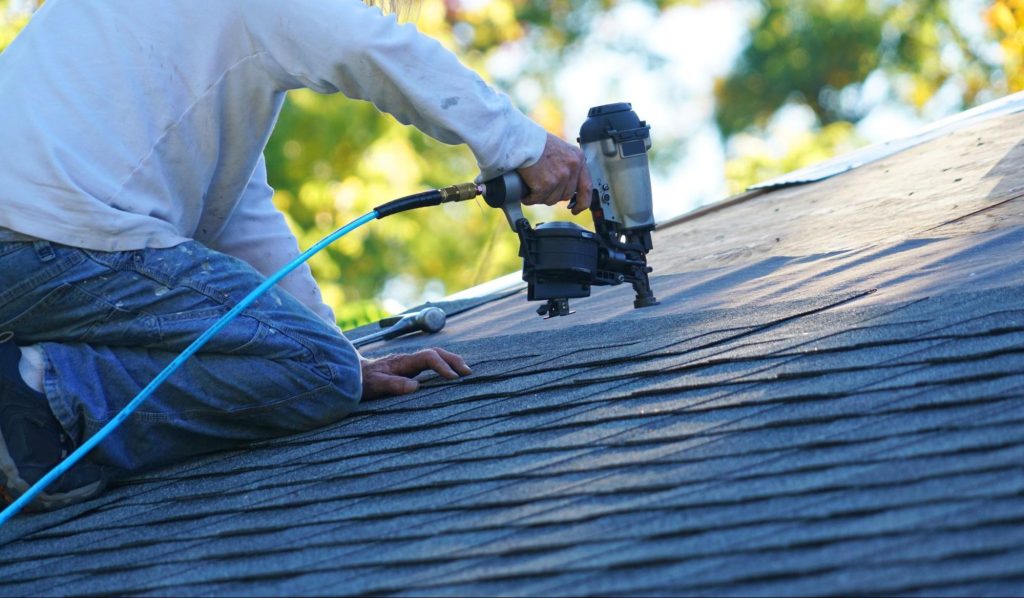
Some fall roof maintenance tasks are simple enough to handle yourself, but climbing onto a roof to check flashing, ventilation, or shingle condition is not worth the risk. A roofing contractor can spot the kind of minor issues that are easy to miss and address them with timely repairs before winter weather turns them into a bigger job. If your roof takes storm damage at any point this season, our storm damage repair team can assess and fix the damage before it spreads.
Get Your Roof Ready for Winter
Fall roof maintenance is one of the most useful things a homeowner can do to protect their home before the harsh weather conditions of winter arrive. A clean set of gutters, a solid inspection, proper insulation, and sound flashing go a long way toward keeping your roof watertight through the winter months.
At GoTo Roofing, we serve Ann Arbor and the surrounding communities with hands-on, onsite supervision from the first inspection through the final cleanup. Contact us today to schedule your fall roof inspection and head into winter with confidence.
Copyright © 2026 WebLocal, Inc.