
How to Avoid Emergency Roof Repair: Tips for Damage Prevention
Short Answer: Most emergency roof repair calls start as small problems that went unnoticed for months. Two inspections a year, clean gutters, trimmed tree limbs, prompt flashing and shingle repairs, and proper attic ventilation prevent the majority of roofing emergencies. If a roof leak or storm damage does happen, temporary repairs stop further damage until a permanent repair can be scheduled.
Nobody plans for a roofing emergency. It usually shows up at the worst possible moment: water dripping through a ceiling during heavy rain or a section of shingles scattered across the yard after a night of high winds. At that point, your options narrow quickly, and the price goes up.
The good news is that most emergency roof repair situations are preventable. Roofs rarely fail without warning. They give you signals for months, sometimes years, before a small issue becomes significant damage. Learning to read those signals and act on them is the difference between routine and emergency roof repair.
What Counts as a Roofing Emergency
Not every problem needs immediate assistance. Understanding the difference helps you respond correctly and avoid paying emergency rates.
| Situation | Urgency Level | What to Do |
|---|---|---|
|
Active water coming through the ceiling
|
Emergency
|
Call for emergency roofing services, contain water, document damage
|
|
Large section of missing shingles after a storm
|
Emergency
|
Temporary tarp, then schedule permanent repair
|
|
Tree limb resting on the roof
|
Emergency
|
Do not attempt removal yourself; call a professional
|
|
Sagging roof deck or visible structural damage
|
Emergency
|
Leave the area below; call immediately
|
|
One or two missing shingles, no leak
|
Urgent, not emergency
|
Schedule roof repair within a week or two
|
|
Small water stain on ceiling, no active drip
|
Urgent, not emergency
|
Schedule an inspection promptly
|
|
Granules in the gutter, aging roof
|
Routine
|
Plan an inspection and budget for replacement
|
An emergency situation means water is actively entering the home or the roof structure is compromised. Everything else is a repair that should happen soon.
Why Emergency Roof Repair Costs More
Emergency roofing contractors charge more for the same work for a reason. Crews get pulled off scheduled jobs. Work happens in inclement weather, after dark, or on weekends. Material selection is limited. Access to the roof is harder and slower when conditions are poor.
There is also the hidden cost. By the time water reaches your ceiling, it has already passed through the roof deck, insulation, and framing. A repair that would have cost a few hundred dollars as routine maintenance can turn into interior damage, ruined insulation, and mold remediation costs. Water damage rarely stays in one place.
Catch the Early Signals
Roofs often show signs that repair is needed. A stain on a ceiling, grit collecting at the base of a downspout, or a shingle curling at one corner. Each detail has insight about the state of your roof, and each one could potentially be a repair that gets more expensive the longer it waits.
Here are the signs worth a closer look.
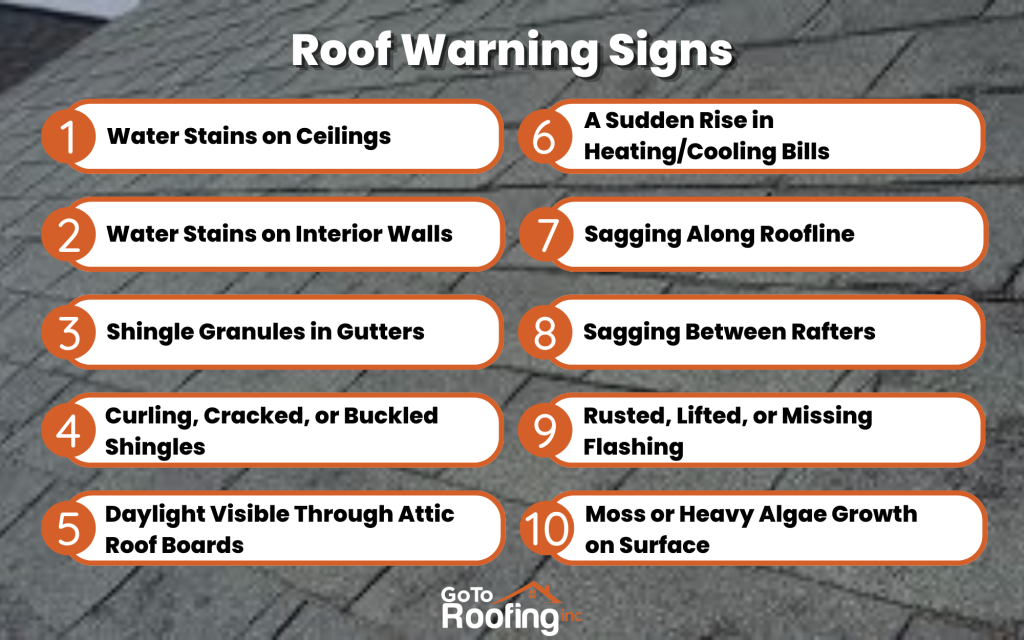
If you spot any of these, call for an inspection rather than waiting to see whether it gets worse. Caught early, most of these issues are a straightforward roof repair. Left alone, these issues can turn into water damage, ruined insulation, and significant damage that ends with an emergency roof repair.
Prioritize Consistent Roof Maintenance
Preventing a roof emergency comes down to a handful of habits. None of them are complicated, and most cost very little.
Schedule Regular Inspections
Have your roof professionally inspected twice a year, in spring and fall, plus after any severe weather event. A trained eye catches cracked flashing, lifted shingles, failing sealant, and popped nails long before they turn into a sudden leak.
Keep Gutters and Downspouts Clear
Clogged gutters are one of the most common causes of preventable roof damage. When water cannot drain, it backs up under the shingles at the eaves, soaks the roof deck, and rots fascia boards. In winter, that same standing water freezes and forms ice dams.
Clean your gutters at least twice a year, and more often if you have overhanging trees. Check that downspouts carry water several feet away from the foundation.
Trim Overhanging Branches
Tree limbs that hang over the roof cause damage in three ways. They drop leaves that clog gutters, they scrape granules off asphalt shingle surfaces every time the wind blows, and they come down entirely during storms. Keep branches trimmed back at least 10 feet from the roofline.
Address Small Repairs Immediately
A single missing shingle is a small job. That same missing shingle six months later, after rain has worked its way into the underlayment and roof deck, is a much larger job. The gap between “minor annoyance” and “extensive damage” is usually measured in unexpected weather events, not years.
Check Attic Ventilation and Insulation
Your attic tells you a great deal about your roof. Poor ventilation traps heat and moisture, which shortens the life of roofing materials from the underside and causes ice dams in winter. Inadequate insulation lets heat escape and creates the same problem.
Once or twice a year, go into the attic with a flashlight. Look for daylight coming through the roof deck, dark staining on the wood, damp or compressed insulation, and rust on nail tips. Any of these deserve immediate attention.
Inspect Flashing and Sealant
Flashing is the metal that seals the joints where the roof meets chimneys, vents, skylights, and walls. Most leaking roof calls trace back to flashing rather than the field of the roof itself. Sealant dries out and cracks over five to ten years, and it is far cheaper to reapply than to repair the water damage that follows.
Know Your Roof’s Age
An asphalt shingle roof typically lasts 20 to 30 years depending on materials, ventilation, and climate. If yours is past year 18, start planning. Waiting until failure means replacing it on someone else’s timeline, often during a roofing emergency and usually with less time to compare options or arrange financing.
Spread the Work Across the Year
Roof upkeep gets easier when it is broken into a few small jobs instead of one big annual push. Each season brings its own wear, and handling it as it comes keeps any one job from getting too big.
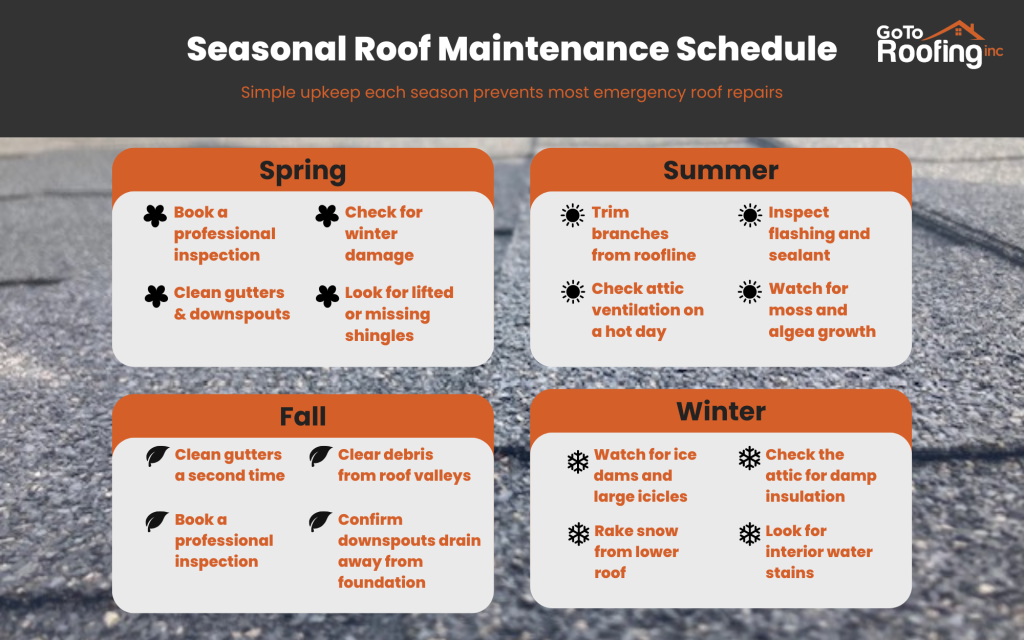
Putting these four seasonal checks on your calendar keeps your roof sound and lowers the likelihood of emergency repair. An important tip to note is to also check your roof after any severe weather. Do a ground-level walk around the house for missing shingles, dented gutters, or debris on the roof, then check inside for new water stains.
If You Already Have a Roof Emergency
Prevention helps going forward, but if water is coming in right now, here is the order of operations:
- Move furniture and belongings out of the affected area and place buckets under active drips.
- If a ceiling is bulging with trapped water, poke a small hole at the low point to release it in a controlled way rather than letting it collapse.
- Photograph and video everything before you clean up or make temporary repairs, since your insurance claim depends on documentation.
- Call an emergency roof repair service.
- Use a temporary repair, usually a tarp or peel-and-stick patch, to stop further damage until conditions allow a permanent repair.
- Contact your insurance carrier. Storm damage repair is often covered, while damage traced to deferred maintenance typically is not.
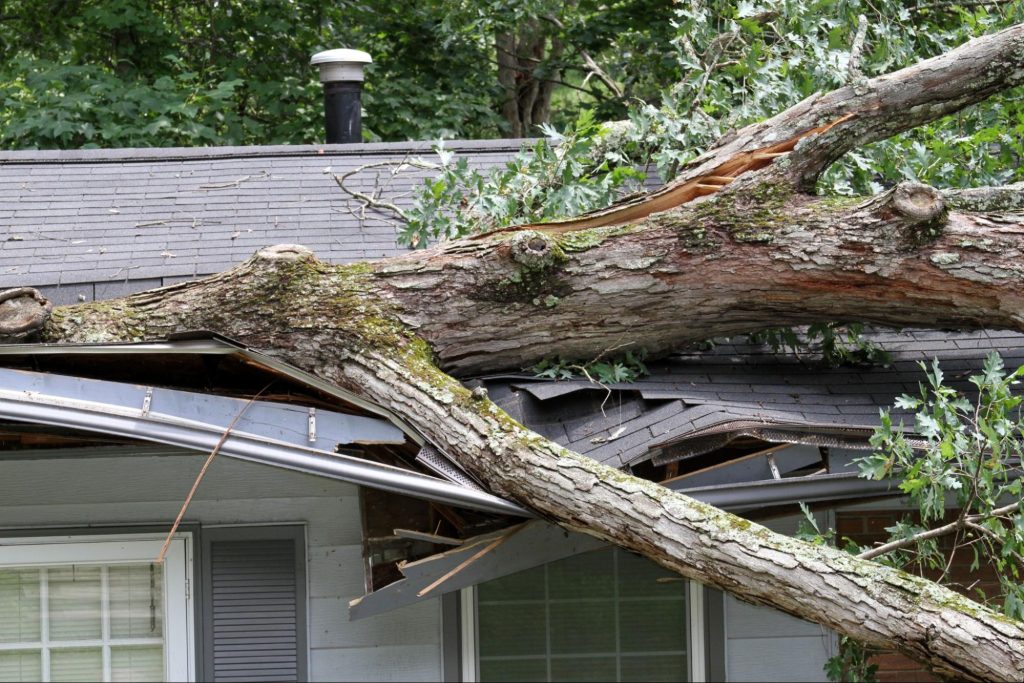
That last point matters. Insurance coverage generally applies to sudden events like high winds, hail, or a fallen tree. If an adjuster determines that a leak developed over years of neglect, the claim can be denied. Documented regular maintenance and inspection records strengthen your position considerably.
Protect Your Roof Before the Next Storm
Emergency roof repair is expensive, stressful, and almost always avoidable. Regular inspections, clean gutters, trimmed trees, prompt small repairs, and a well-ventilated attic prevent the overwhelming majority of roofing emergencies.
At GoTo Roofing, we help Ann Arbor homeowners stay ahead of roof problems with honest inspections and straightforward recommendations. We stay hands-on with on-site supervision through the whole project, keep communication clear, install American-made materials, and leave your property as clean as we found it. If a storm has already caused damage, we can help with repairs and walk you through the financing process.
Contact us today to schedule an inspection and get a free estimate.
Copyright © 2026 WebLocal, Inc.