
How to Choose a Roofing Contractor
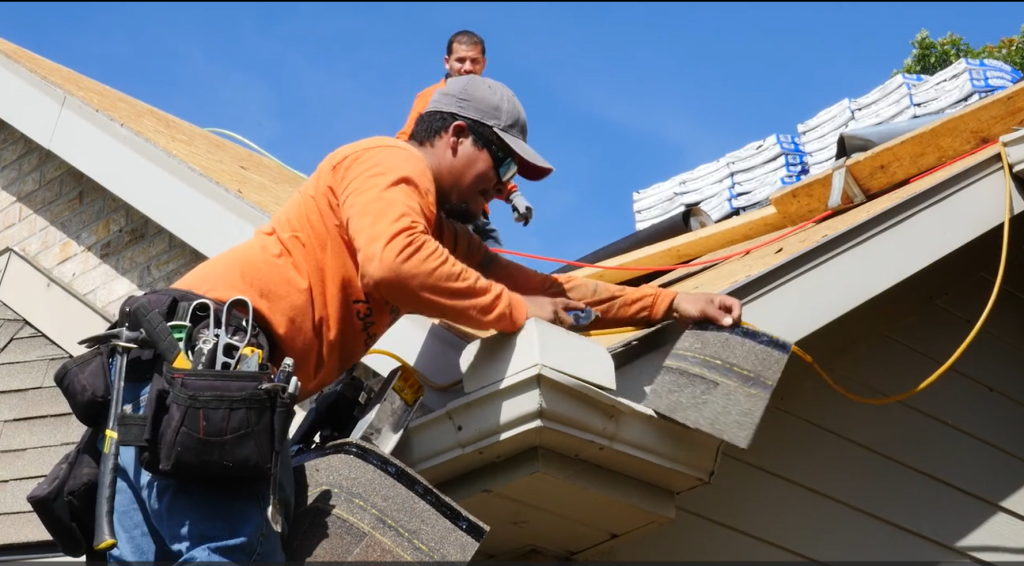
Short Answer: To choose the right roofing contractor, start by checking that the company has proper licensing in Michigan and carries appropriate insurance. Then compare written estimates, reviews, references, warranties, materials, and project supervision. A reputable contractor should explain the scope of work, answer your questions, put promises in writing, and give you time to make an informed decision.
A roof repair or replacement is a major investment, and the contractor you hire can have as much impact on the result as the materials. A low price may look attractive, but poor installation, unclear warranties, or an incomplete scope can create expensive problems later.
If you are trying to figure out how to choose a roofing contractor, focus on proof rather than promises. The right contractor should be able to show their credentials, explain their process, and tell you what will happen before, during, and after your roofing project.
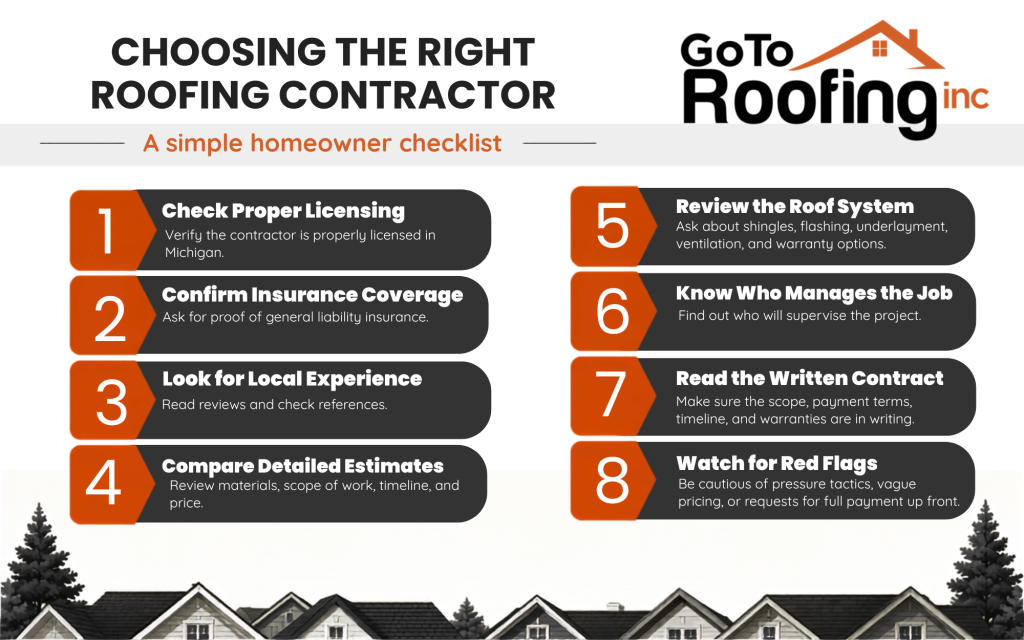
1. Verify the Contractor Has Proper Licensing in Michigan
Homeowners should start with licensing. The Michigan Department of Licensing and Regulatory Affairs, or LARA, regulates residential builders and Maintenance & Alteration contractors. Roofing is specifically listed as one of the trades covered under a Maintenance & Alteration contractor license.
Do not rely only on a license number printed on a truck, website, or estimate. Use Michigan’s LARA license search to confirm that the license is active and matches the contractor you are considering. LARA also recommends verifying a contractor’s credentials before work begins.
A legitimate contractor should have no problem providing:
- Their business name and contact information
- Their contractor license number
- Proof of current insurance coverage
- A written estimate
- References or examples of recent projects
If a potential contractor avoids basic questions about proper licensing, consider it a warning sign.
2. Ask About Liability Insurance and Workers’ Compensation
Proper insurance helps protect both the homeowner and roofing company when something goes wrong on a jobsite. The Federal Trade Commission recommends considering licensed and insured contractors and asking for proof of insurance.
Two types of coverage are especially important to ask about:
General liability insurance: This can provide coverage when the contractor’s work causes accidental property damage or certain injuries.
Workers’ compensation coverage: This is designed to cover qualifying employee injuries that happen while working.
Insurance needs can vary based on the company and workforce structure, so ask the roofing contractor to explain its coverage. If you want additional confirmation, contact the insurance company listed on the certificate.
A professional contractor should be comfortable answering these questions and providing documentation when requested.
3. Look for a Local Roofing Contractor With a Track Record
A local roofing contractor is easier to research than a company that has just arrived in the area. Look for an established business with completed projects, customer feedback, and experience working on homes similar to yours.
Online reviews are useful, but do not judge a company by its star rating alone. Read recent reviews and look for patterns involving communication, cleanup, scheduling, workmanship, and how the contractor handled problems.
You can also check:
- Google reviews
- Better Business Bureau information
- Local references
- Photos of completed work
- How long the roofing company has served the area
For Michigan homeowners, local experience matters because our roofing systems deal with snow, ice, wind, rain, and freeze-thaw cycles. A roofing contractor should understand how shingles, flashing, ventilation, gutters, and attic conditions work together as part of the complete roof system.
4. Make Sure the Contractor Fits the Type of Project
Not every roofing company works on the same types of buildings or projects. Before comparing estimates, make sure the contractor has experience with the type of roof you need repaired or replaced.
Most homeowners will want a residential roofing contractor with experience working on houses similar to theirs. A business or commercial property owner may need a commercial roofing contractor that works with commercial roofing materials, drainage systems, and larger building layouts.
The scope matters too. A contractor who regularly handles small repairs may not be the best fit for a full roof replacement, while another company may specialize in larger replacement projects.
Choosing a contractor with relevant experience can make the planning process easier and reduce surprises once work begins.
5. Compare More Than the Bottom-Line Price
Getting multiple estimates gives you a better idea of what your roofing project should include and what a reasonable price looks like. The Federal Trade Commission recommends getting multiple written estimates and warns consumers not to automatically choose the lowest bidder.
| What to Compare | What to Look For |
|---|---|
|
Roofing materials
|
Manufacturer, product line, color, and related materials
|
|
Existing roof
|
Whether old roofing will be removed and how disposal is handled
|
|
Roof system
|
Underlayment, flashing, vents, drip edge, and ice protection
|
|
Labor |
What installation work is included
|
|
Property protection |
Plans for landscaping, siding, driveways, and cleanup
|
|
Timeline
|
Expected start date and estimated completion
|
|
Payment |
Deposit, progress payments, and final payment terms
|
|
Warranty
|
Deposit, progress payments, and final payment terms
|
If one estimate is much lower than the others, ask why. The right roofing contractor should be willing to walk you through the estimate so you understand exactly what you are paying for.
6. Understand Who Will Be Managing the Job
Ask who will be present once the work begins. Will there be a project manager onsite? Who should you contact with questions? What happens if the crew finds damaged decking or another problem after removing the existing roof?
Clear supervision gives the homeowner a consistent point of contact and helps keep the crew, materials, schedule, and property protection aligned with the written scope.
GoTo Roofing provides whole-project, on-site supervision rather than relying on quick check-ins during the job.
7. Review the Materials and Warranties
A new roof is more than shingles. Your estimate may include underlayment, flashing, vents, starter shingles, ridge caps, ice and water protection, fasteners, and other parts of the roofing system.Ask what products will be used and why the contractor recommends them for your home.
You should also ask about two different types of warranty protection:
- Manufacturer warranty: Covers qualifying issues related to roofing materials based on the manufacturer’s terms.
- Workmanship warranty: Covers qualifying problems related to the contractor’s installation based on the roofing company’s terms.
Manufacturer certifications can provide another point of comparison. Within the roofing industry, manufacturers set their own standards for contractor certification programs. A certification can show that a company has met certain manufacturer requirements, but it should not replace your own research into licensing, insurance, reviews, and past work.
8. Be Careful With Storm Chasers and High-Pressure Sales
After major storm damage, homeowners may suddenly receive calls, flyers, or door knocks from contractors offering immediate roof inspections or repairs. Some may be legitimate. Others may be storm chasers that move into an area after severe weather and leave once demand slows down.
The FTC warns homeowners about contractors who pressure them to make an immediate decision, demand full payment up front, only accept cash, or appear at the door claiming they have leftover materials.
Be especially careful if someone encourages you to provide false information to an insurance company. A property owner should never participate in insurance fraud to lower the cost of a roofing project.
A reputable contractor should give you time to review the roof inspection, estimate, written contract, and any insurance paperwork before you sign.
9. Read the Written Contract Before Work Starts
The contract should match what you discussed with the roofing company. Do not assume a
conversation or sales presentation will automatically become part of the final agreement.
Before signing, check that the written contract covers:
- Contractor name and contact information
- License information
- Detailed scope of work
- Materials being installed
- Start and completion expectations
- Payment schedule
- Cleanup and disposal
- Change-order process
- Manufacturer and workmanship warranty terms
Do not sign a contract with blank spaces or vague descriptions. Ask questions until you understand exactly what you are approving.
10. Ask the Right Questions Before Hiring
You do not need to be a roofing expert to interview a contractor.
Ask:
- Are you licensed to perform this roofing work in Michigan?
- Can I see proof of your current insurance coverage?
- Who will supervise my project onsite?
- What does this estimate include and exclude?
- How will you protect my landscaping and property?
- How do you handle unexpected roof damage?
- What workmanship warranty do you provide?
- Which manufacturer warranties apply?
- Who handles permits when they are required?
- How will cleanup and nail collection be handled?
Pay attention to how the contractor answers. Clear, specific responses are more useful than sales language or promises that never make it into writing.
11. Warning Signs to Look For
Choosing the right contractor also means knowing what warning signs to look for. Some problems become obvious before the work even starts, especially when a contractor avoids questions, pressures you to make a quick decision, or provides unclear information. Use the red flags below to help identify situations that deserve a closer look.
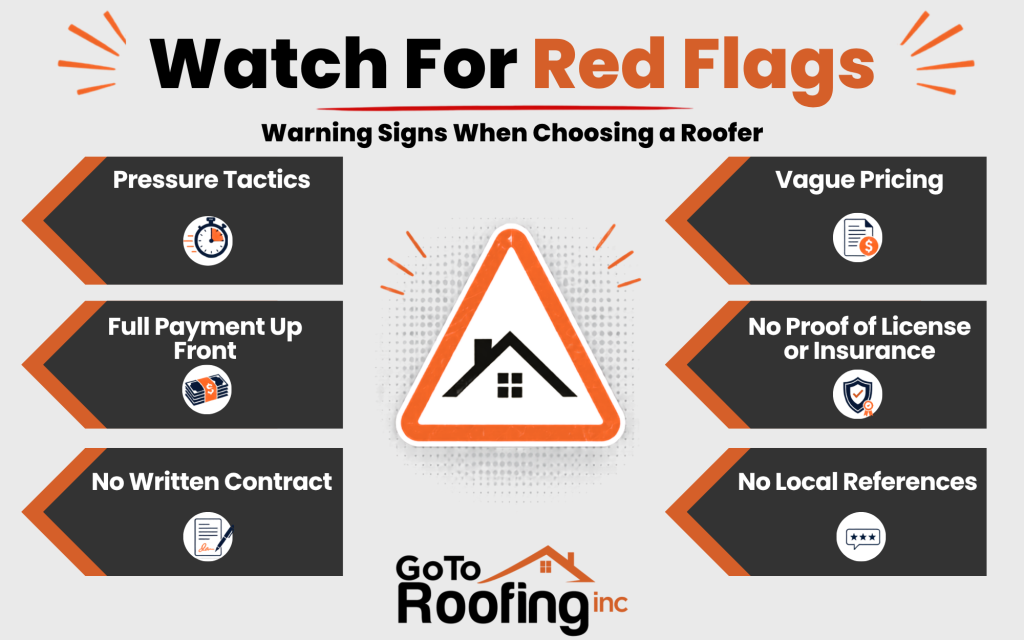
One red flag does not always mean a contractor is unreliable, but multiple warning signs should give you a reason to keep looking. A reputable roofing contractor should be willing to answer questions, provide documentation, explain pricing, and put the details of your project in writing before work begins.
10 Things to Look for in a Roofing Contractor
When comparing roofing companies, look beyond the estimate price and focus on the qualities that show a contractor is prepared to handle your project properly. Use this checklist when evaluating your options:
- Experience: Choose a contractor with a proven history of completing similar roofing projects.
- Up-to-Date Knowledge: Look for a company that stays current on roofing products, training, and industry standards.
- Care for Your Home: Find a contractor who respects your property and keeps the jobsite clean.
- Active Ownership and Leadership: Choose a company where leadership stays involved and understands your project.
- Environmentally Responsible Practices: Ask how the contractor handles old materials and jobsite waste.
- Certifications and Expertise: Look for certifications, training, and experience that show industry knowledge.
- Positive Reviews and References: Read reviews and ask for references to learn about past customer experiences.
- Customer Satisfaction: Choose a company with a reputation for quality work and reliable service.
- Warranty Options: Review available warranties and understand what your project coverage includes.
- Proper Insurance: Confirm the contractor has liability insurance and workers’ compensation coverage.
Choose the Right Roofing Contractor for Your Home
Learning how to choose a roofing contractor comes down to checking the details before work starts. Verify licensing, ask about insurance, compare written estimates, review warranties, research past work, and find out who will supervise the project. The right contractor should be able to explain each part of the job without making you feel rushed.
At GoTo Roofing, we help homeowners in Ann Arbor and surrounding Michigan communities with roof repair, roof replacement, gutters, siding, windows, and attic ventilation and insulation. Our team stays involved throughout the project, keeps communication clear, respects the property, and stands behind the workmanship.
If you are planning a roofing project and want straightforward recommendations for your home and budget, contact GoTo Roofing to schedule an inspection and get an estimate.
Copyright © 2026 WebLocal, Inc.