
How to Identify Roof Hail Damage & What To Do About It
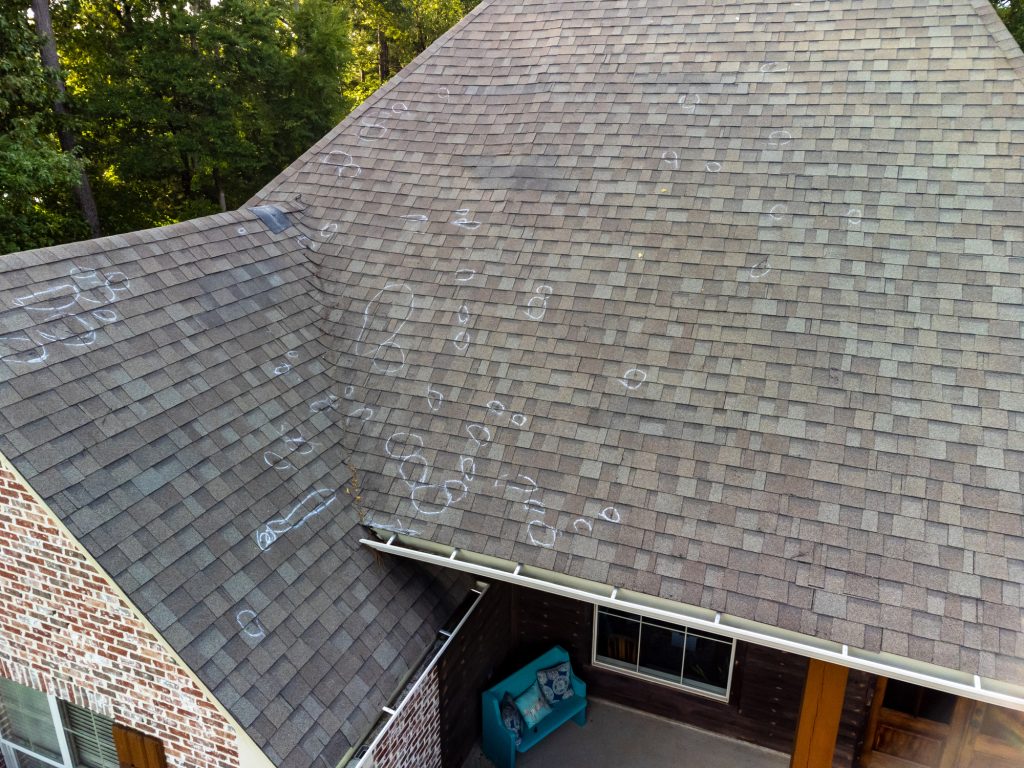
Short Answer: Roof hail damage shows up as round dents, dark bruises, cracked shingles, and missing granules on asphalt shingles. On metal roofs, damage may appear as visible dings, scratches, or chipped protective coating, while composite shingles often show cracks, surface bruising, or chipped edges. After a hail event, inspect your property from the ground, document any visible damage, contact your insurance company, and schedule a professional roof inspection before filing a hail damage claim or starting repairs.
Hail can come out of nowhere and leave your roof in worse shape than it looks from the ground. Even a short hail storm can knock loose shingle granules, dent metal panels, crack composite shingles, and create weak spots that turn into leaks months later. Knowing how to spot roof hail damage early helps you protect your home, file a successful insurance claim, and avoid bigger problems down the road.
What Causes Roof Hail Damage
Hail forms when strong updrafts in a severe storm carry raindrops into very cold parts of the atmosphere, where they freeze into balls of ice. The longer they bounce around inside the cloud, the bigger they get, with hailstones ranging from the size of a pea to larger than a baseball. NOAA’s National Weather Service Storm Prediction Center recorded over 5,000 major hail events across the United States in 2025, each one capable of causing serious roof damage, broken windows, and dented vehicles.
Areas in the central United States known as “Hail Alley,” which includes parts of Texas, Colorado, Nebraska, and surrounding states, see the most severe hail. But severe storms can produce damaging hail in nearly any state, including right here in Michigan. Wind damage often goes hand in hand with severe hail, so it’s smart to check for both after a storm.
Signs of Hail Damage on Your Roof
Different roofing materials show hail damage in different ways. Some signs are easy to spot, while others take a trained eye. Here’s what to look for based on what your roof is made of:
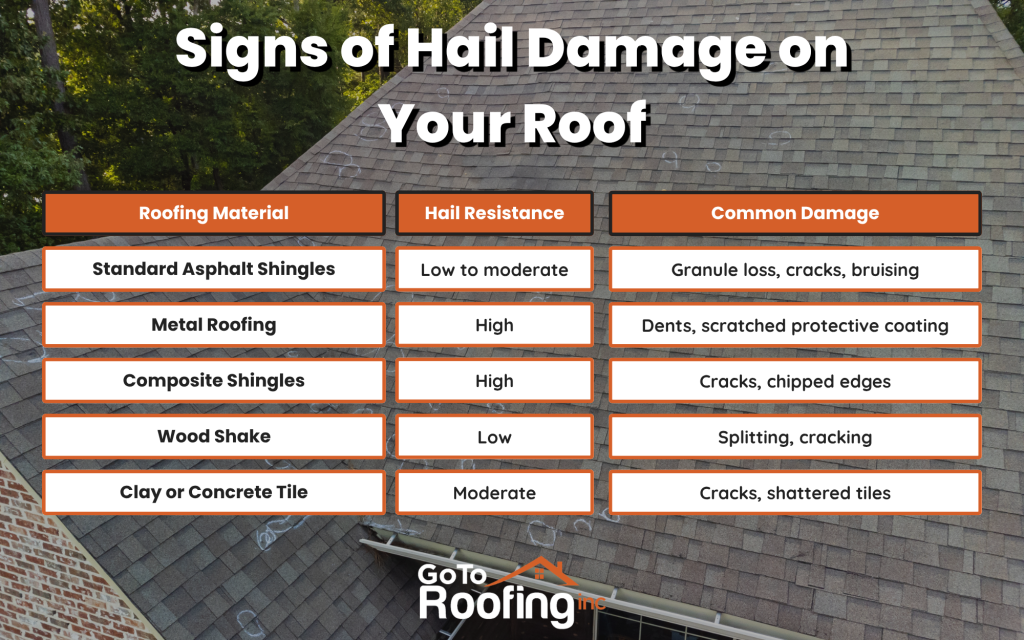
Signs of Hail Damage on Asphalt Shingles
Asphalt shingles are the most common roofing material on American homes, and they often take the brunt of a hail event.
Common signs of hail damage include:
- Round black spots or bruises where the granules have been knocked away, leaving the asphalt mat exposed
- Cracks in the shingle that radiate outward from the impact point
- Soft spots that feel like a bruise on an apple when pressed
- Loose granules collecting in gutters or downspouts
- Exposed fiberglass mat showing through the surface
Hail damage on asphalt shingles is often described as random. If you see a pattern of straight rows of damage, that’s likely foot traffic, falling tree branches, heat exposure blisters, or manufacturing defects, not hail.
Signs of Hail Damage on Metal Roofing
A metal roof handles hail better than most materials, but it can still show problems after a severe hail event.
Look for:
- Dents and dings in the panels, especially on the south and west-facing slopes
- Chipped or scratched protective coating that exposes the metal underneath
- Loose or damaged flashing around chimneys, vents, and valleys
- Dented gutters and downspouts that match the impact pattern on the roof
Some metal roof damage is considered cosmetic, which matters when filing a claim. Many homeowners insurance policies include a cosmetic damage exclusion for metal roofing, which means dings that don’t affect performance may not be covered.
Signs of Hail Damage on Composite Roofing
Composite shingles are designed to mimic the look of slate, wood shake, or tile while offering better impact resistance. They hold up well in a hail storm, but they’re not damage-proof.
Common signs of hail damage on a composite roof include:
- Cracks or splits running through the shingle, often radiating from the impact point
- Chipped edges or corners on individual shingles
- Dislodged or shifted shingles from high winds during the same storm
Many composite roofing products carry a Class 4 impact resistance rating, which is the highest available. Even so, very large hailstones can still cause damage worth filing a claim over. A trained roof inspector can tell the difference between normal weathering and storm damage, which is helpful when working with an insurance adjuster.
Other Signs of Hail Damage Around Your Property
Sometimes, the easiest way to confirm a hail storm caused roof damage is to check other parts of your property.
If you see hail damage in these places, your roof likely took a hit too:
- Dents on your air conditioner fins, gutters, or downspouts
- Cracked or shattered window screens
- Splatter marks or chipped paint on siding, fences, or decks
- Dented mailboxes, grills, or outdoor furniture
- Damaged plants and shrubs
What To Do After You Find Hail Damage
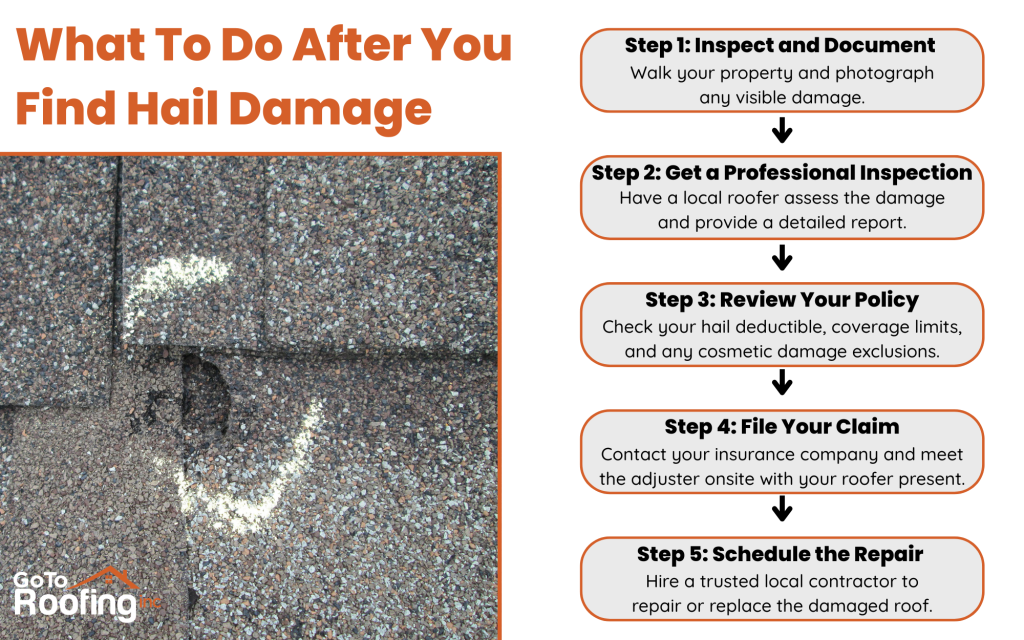
Finding damage is stressful, but the steps you take next can make a big difference in how smoothly your hail claim goes and how quickly your roof gets fixed.
Step 1: Inspect Your Property and Document Everything
After severe weather, take a careful look at your home before calling a contractor or your insurance agent, but avoid climbing on the roof yourself. Walk the perimeter of your house and look up. Check inside your attic for daylight coming through the roof deck, water stains on the rafters, or wet insulation.
Take dated photos and videos of any visible damage on the roof, gutters, siding, and surrounding property. Note the date of the hail event, the hailstone size if you saw them, and the time the storm passed. This becomes part of your insurance claim file. If you suspect significant damage, call a local roofing contractor for a professional roof inspection before filing your claim, since a trained roofer knows how to spot subtle signs of hail damage that homeowners often miss.
Step 2: Schedule a Professional Roof Inspection
Before you file a claim, have a local roofing contractor perform a professional roof inspection. A trained roofer knows how to spot subtle signs of hail damage that homeowners often miss, and they can tell the difference between fresh storm damage and normal wear. A detailed inspection report gives you the documentation you need to back up your claim and helps you avoid disputes with your insurance adjuster later.
Step 3: Review Your Homeowners Insurance Policy
Most home insurance policies cover storm damage from hail, but coverage varies.
Check your homeowners policy for:
- Your hail deductible, which is often separate from your standard deductible
- Whether your policy covers full roof replacement or only repair on the damaged section
- The deadline for reporting damage claims
- Any cosmetic damage exclusion that may affect a metal roof claim
Major insurance companies have specific procedures for handling a hail damage claim. Call your insurance agent if you have questions about your coverage. Your roofer can also help you understand what your policy covers, point out language that affects your claim, and translate the technical roofing terms in your paperwork.
Step 3: File Your Insurance Claim
Contact your insurance company to start the claims process. The insurance adjuster will visit your property to assess the damage and decide what your insurance coverage will pay. Try to have your roofer on-site during the adjuster’s visit so they can point out damage together.
If you don’t agree with the adjuster’s findings, you have options. Some homeowners hire a public adjuster, who works for you instead of the insurance company, to negotiate the claim.
Step 4: Schedule the Repair or Roof Replacement
Once the claim is approved, work with a trusted local contractor to repair or replace the damaged roof. Watch out for storm chasers, the out-of-town contractors who knock on doors after every severe storm. A local company that’s been in the community for years is almost always a safer bet.
How to Protect Your Roof From Future Hail Damage
You can’t stop the weather, but you can make your roof better prepared for the next severe storm.
Upgrade to impact-resistant materials. Class 4 impact-resistant shingles are tested to withstand a 2-inch steel ball dropped from 20 feet. Many insurance companies offer discounts on homeowners insurance for homes with an impact-resistant roof, which can offset the higher upfront cost.
Schedule regular roof inspections. A yearly inspection catches small problems before they turn into significant damage. Inspections after any severe storm are especially smart in areas prone to hail.
Maintain your roof. Replace cracked or missing shingles right away, keep gutters clear, and trim back overhanging branches. A well-maintained roof handles a hail event better than one that’s already worn down.
Keep records. Hold onto receipts, inspection reports, and photos of your roof in good condition. If a hail claim comes up later, this documentation makes the process smoother.
Get Help From a Trusted Local Roofer
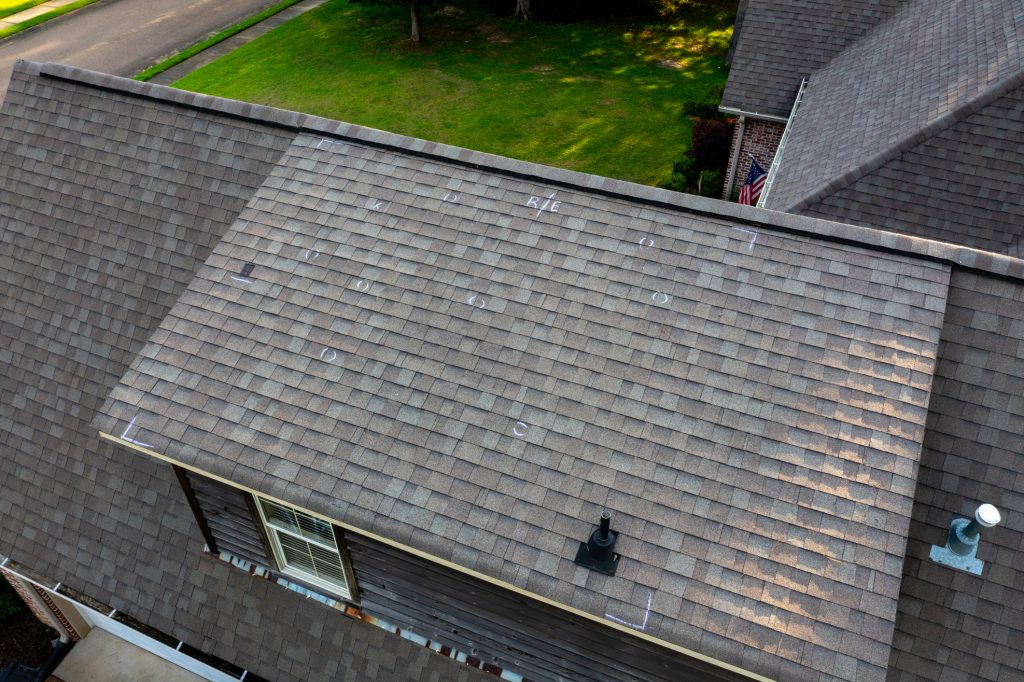
Roof hail damage isn’t always obvious from the ground, and missing the signs can lead to leaks, mold, and a much bigger repair bill later. Acting quickly and working with a knowledgeable contractor gives you the best shot at a smooth claims process and a roof that holds up for years.
At GoTo Roofing, we help Ann Arbor area homeowners handle roof repair and full roof replacement after severe weather, with hands-on, onsite supervision from start to finish. If you think your roof may have taken a hit from a recent hail storm, contact us today for a free inspection.
Copyright © 2026 WebLocal, Inc.