
The Importance of Proper Roof Flashing

Short Answer: Roof flashing is thin metal installed where your roof meets walls, chimneys, vents, and valleys to guide water away from these vulnerable areas. Proper flashing keeps water out of your home and protects the roof deck, walls, and structure from leaks, rot, and mold. Poor or aging flashing is one of the most common sources of a roof leak. Regular inspections and correct installation keep the watertight seal working through heavy rain, snow, and freeze-thaw cycles.
Your shingles are not the only thing keeping water out of your home. The metal pieces tucked into your roof’s joints and edges do a lot of quiet work. This thin material, called flashing, sits at the spots where water is most likely to sneak in. When it is installed and maintained the right way, you rarely think about it. When it fails, you end up with stains on the ceiling, a musty smell in the attic, and repair bills that keep climbing.
What Is Roof Flashing?
Flashing is thin metal shaped to fit the seams and openings on your roof. Roofers install it anywhere two surfaces meet or anywhere something breaks through the roof plane, such as a chimney, skylight, or vent pipe. Shingles shed water down the slope, but they cannot seal a corner or wrap around a pipe. That is what flashing is for.
Most flashing is bent or cut to match the angle it protects, then layered with the shingles so water flows over the top of it and off the roof. A small strip of metal in the right place stops water from working its way into the roof deck, where it can cause real damage.
Why Proper Roof Flashing Matters
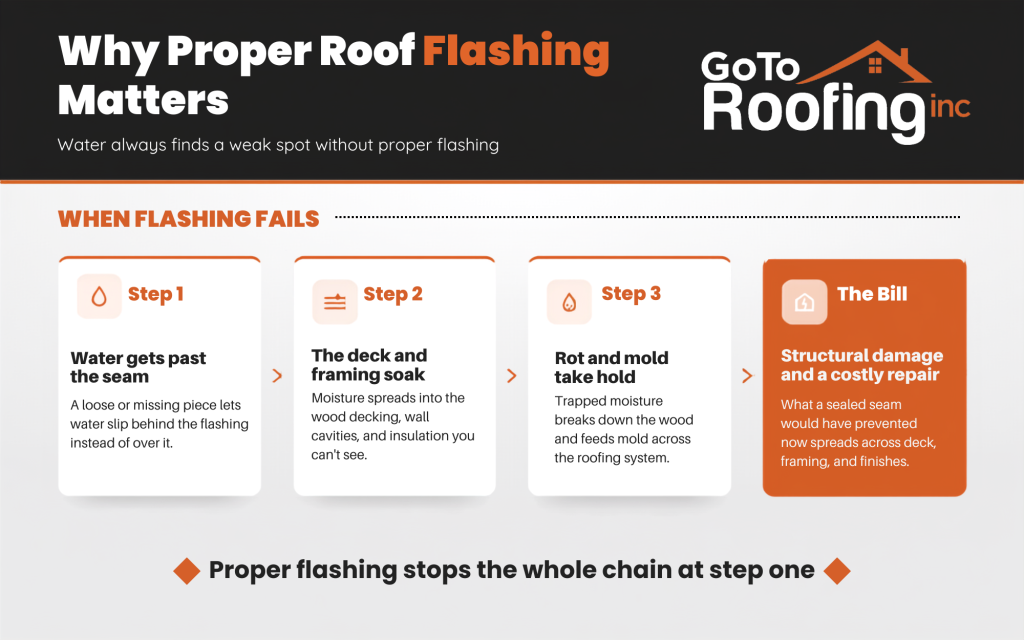
Water always finds the weak spot. Roof valleys, wall junctions, and roof penetrations are the critical areas where water collects and changes direction, and those are exactly the places a leak starts. Proper flashing gives that water a clear path off the roof instead of into your home.
When flashing is missing, loose, or poorly installed, water intrusion follows. A slow leak can soak the roof deck, drip into wall cavities, and reach insulation and framing. Over time this leads to wood rot, mold growth, and structural damage that costs far more to fix than the flashing itself. Left alone, a small drip can turn into extensive damage across your roofing system. Catching a flashing problem early is the difference between a minor fix and an expensive repair.
Proper flashing also protects the structural integrity of your home during harsh weather conditions. Wind-driven rain, snowmelt, and freeze-thaw cycles all push water sideways and upward, not just straight down. Good flashing holds that watertight seal when the weather works against it.
The Main Types of Roof Flashing
Different parts of your roof need different flashing. Here are the types you are most likely to have.
Step Flashing
Step flashing protects the joint where a roof slope meets a vertical wall, like the side of a dormer. Instead of one long strip, roofers use individual pieces layered with each course of shingles, creating a stair-step pattern. Each piece overlaps the one below it, so water steps down and away from the wall. Skipping this layering is a common mistake that leads to leaks along the wall line.
Valley Flashing
Where two roof planes meet, they form a valley that carries a heavy volume of runoff during heavy rain. Valley flashing lines these channels with metal so the water runs straight down to the gutters instead of pushing under the shingles. Because roof valleys handle so much water, weak flashing here often shows up as one of the first leaks on a roof.
Base Flashing and Counter Flashing
Base flashing and counter flashing work together to keep water out where a roof meets a chimney or wall. The base flashing covers the lower part of the joint. The counter flashing is installed into the brick or masonry above it and overlaps the base flashing. Together, they create two layers of protection that direct water away from the seam and prevent leaks.
Chimney Flashing
A chimney breaks through the roof on all four sides, which makes it one of the most leak-prone spots on any roof. Chimney flashing usually combines step flashing along the sides, base flashing at the front, and counter flashing set into the brick. When any one piece fails, water runs down the chimney and into the ceiling below.
Vent and Pipe Flashing
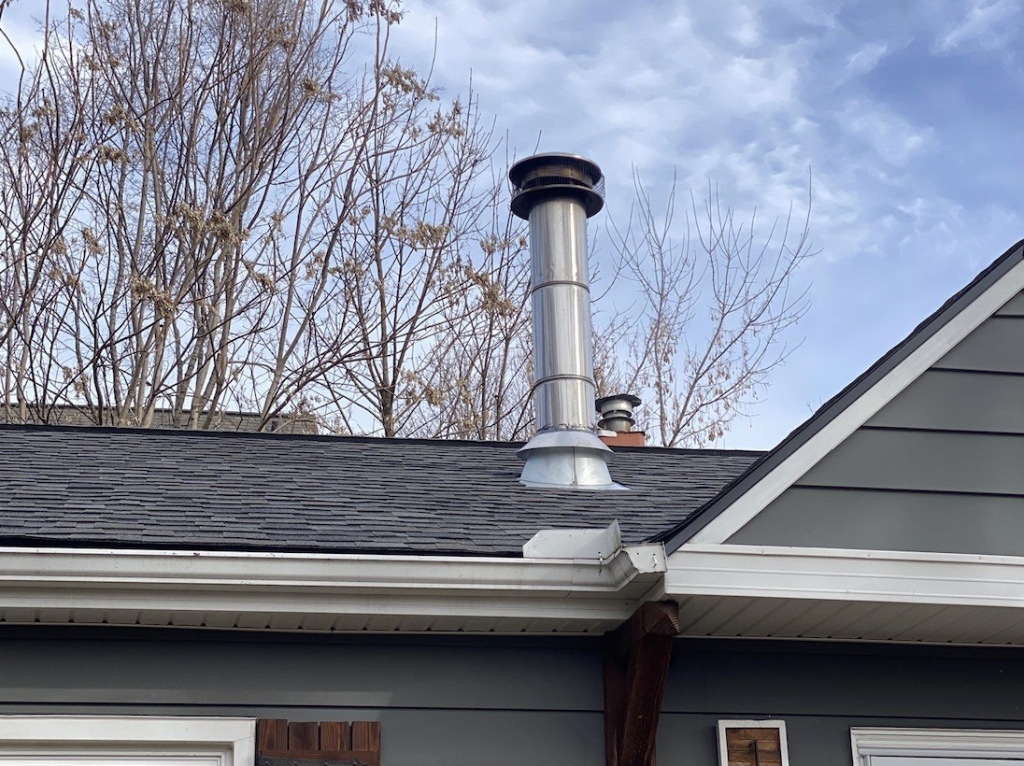
Plumbing vents, exhaust fans, and other roof penetrations need flashing too. These often use a metal base with a rubber or flexible collar that seals tight around the pipe. The collar can crack and dry out over the years, so it is worth checking during any roof inspection.

What Flashing Is Made Of
Flashing comes in a few common metals, and the right choice depends on your roof, your budget, and your local weather conditions.
| Material | What to Know |
|---|---|
|
Aluminum flashing
|
Lightweight and affordable, and a common choice on residential roofs. It should be coated when it touches masonry or treated wood, which can corrode bare aluminum.
|
|
Galvanized steel
|
Strong and budget-friendly. The zinc coating resists rust, though it can wear thin over decades and need replacing.
|
|
Copper
|
Long-lasting and attractive, often used around chimneys and on higher-end roofs. It costs more up front but can last for many years.
|
|
Stainless steel
|
Resists corrosion very well and holds up in tough climates. It sits at the higher end for price.
|
Metal flashing is the standard because it holds its shape and stands up to sun, ice, and moisture better than sealant alone. Caulk and roof cement have their place, but they are not a substitute for properly installed metal flashing.
Signs Your Flashing May Be Failing
You do not need to climb on the roof to catch many flashing problems. Watch for these warning signs:
- Water stains on ceilings or walls, often near a chimney or where the roof meets a wall
- Rust streaks or visible corrosion on metal around the chimney or vents
- Loose, lifted, or missing pieces of metal along valleys or walls
- Cracked or dried-out sealant around roof penetrations
- Damp spots, mold growth, or a musty smell in the attic
- Peeling paint or damaged drywall on interior walls below the roofline
If you notice any of these, it is worth having a roofing contractor take a look before the next big storm.
Common Causes of Flashing Problems
Even good flashing does not last forever. A few things tend to cause it to fail:
- Poor installation: Flashing that is not layered correctly with the shingles or that relies on caulk instead of proper metal work tends to leak early. Careful, proper flashing installation is what prevents most of these failures.
- Age and corrosion: Metal thins and rusts over the years, especially where water tends to sit.
- Storm damage: High winds and hail can bend, loosen, or tear flashing away from the roof.
- Freeze-thaw cycles: Water that gets behind flashing expands as it freezes, widening gaps a little more each winter.
- Settling and movement: As a house shifts over time, rigid seams can pull apart and open a path for water infiltration.
Why Proper Installation Matters
Flashing only works when it is installed the right way. The metal has to be cut to fit, layered in the correct order with the shingles, and fastened so water always flows over it, never under it. This is detailed work, and it is one of the most common places where a rushed roof installation goes wrong.
A skilled roofing contractor knows how each piece overlaps and how to tie flashing into the rest of the roofing system. A steep shingle roof, a metal roof, and a flat roof each shed water differently, so the flashing and the surrounding roofing material have to match the design and the way water moves across that surface. Cutting corners here often leads to callbacks and moisture intrusion within a season or two.
Keep an Eye on Your Flashing
The best way to avoid costly repairs is to catch small issues early. Regular inspections let a professional spot lifted flashing, worn sealant, or early corrosion before water gets inside. A good rule is to schedule a roof inspection once a year and after any major storm.
During a roof replacement, flashing should be replaced or carefully evaluated at the same time. Reusing old, worn flashing under a new roof is a shortcut that can undo the whole job. New flashing installed with a new roof protects your investment and keeps that watertight seal intact for years.
Protect Your Home With Proper Flashing
Flashing may be a small part of your roof, but it does a big share of the work of keeping water out. When it is installed and maintained correctly, it protects your roof deck, your walls, and everything inside from water damage.
At GoTo Roofing, we help homeowners in Ann Arbor and the surrounding communities keep their roofs watertight. That covers flashing repairs, roof repairs, and full roof replacement. We stay hands-on from start to finish, use American-made, quality-guaranteed materials, and explain every step so you know exactly what your roof needs. Contact us today for a free estimate and straightforward advice on protecting your home.
Copyright © 2026 WebLocal, Inc.