
What Are Fascia and Soffit? A Complete Guide for Homeowners
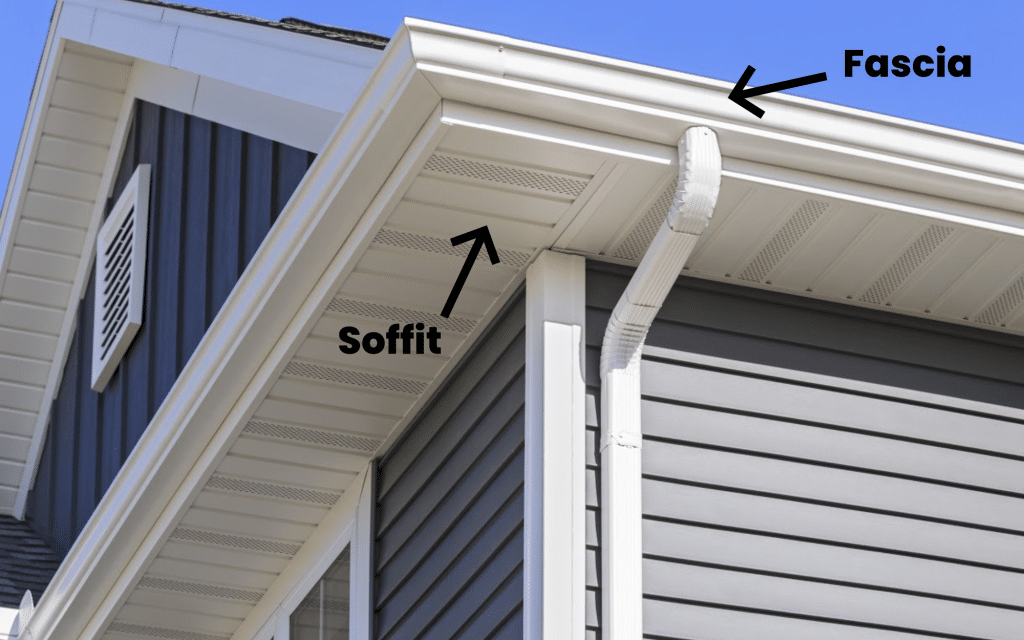
Short Answer: A fascia board is the vertical trim along the lower edge of your roof, covering rafter ends and providing a mounting surface for your gutters. Soffit is the horizontal panel underneath the roof’s overhang, closing the gap between the roof edge and your exterior wall. Together, they protect your roof space from moisture, pests, and weather damage while giving your roofline a finished look.
Most homeowners can point to their shingles and gutters without thinking twice, but fascia and soffit tend to fly under the radar. These components sit at the edge of your roofline, protecting your home from water intrusion, insect damage, and poor ventilation. If you’ve noticed peeling paint along your roofline, animals nesting under your eave, or gutters pulling away, your fascia or soffit likely needs attention.
Here’s everything you need to know about what fascia and soffit are, how they work, what materials are available, and how to keep them in good shape.
What Is a Fascia Board?
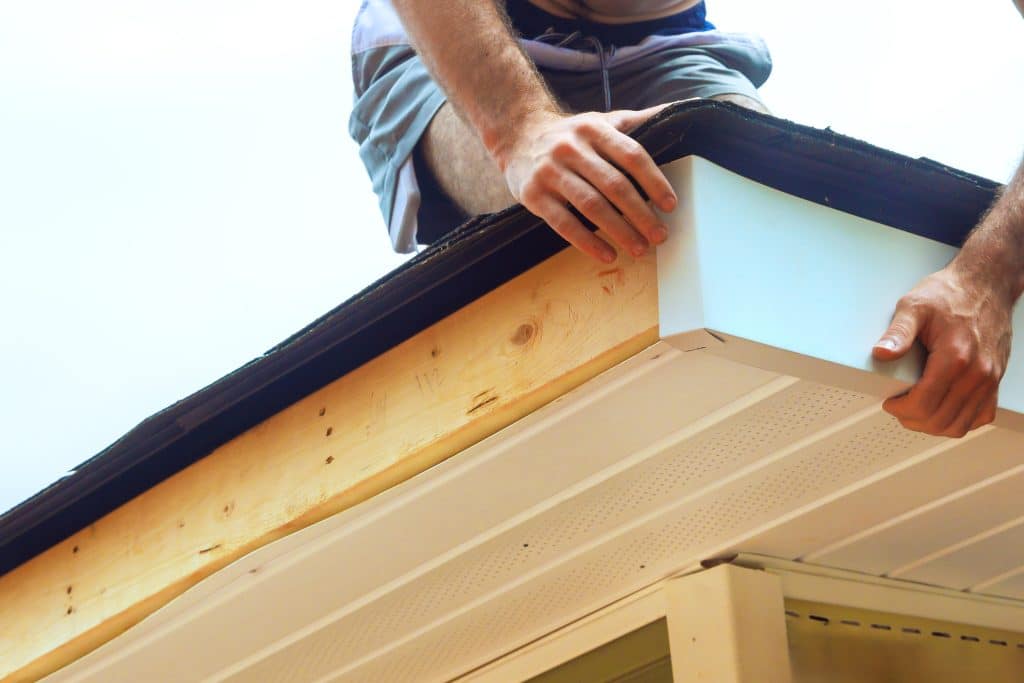
The fascia is the long, straight board that runs along the lower edge of your roof. It’s nailed directly to the exposed ends of your rafters or trusses, with its flat face pointing outward. Standing in your yard and looking up, the fascia is the board you see just below the shingles and above the soffit.
What Does Fascia Do?
The fascia board handles several important jobs at once:
- Supports your gutter system. Your gutters attach directly to the fascia, keeping them securely in place so rainwater drains away from your foundation.
- Protects the roof edge. Without fascia, rafter ends would be exposed to rain, snow, and wind. The fascia shields that area from weather damage and moisture.
- Blocks pests. Birds, squirrels, wasps, and other animals look for gaps along the roofline to nest or enter your attic. A well-maintained fascia board keeps insects and wildlife outside.
- Adds aesthetic appeal. Fascia gives your roofline a clean, polished appearance, covering rough-cut rafter ends and creating a uniform look that ties in with your siding and trim.
How Fascia Connects to Other Roof Components
Think of your roof as having a top and a bottom edge. At the very top, a ridge cap seals the point where both sides of the roof come together. At the bottom, the fascia board caps off the edge where the roof meets the eave. Once the rafters are up, the fascia is nailed across their ends to create a flat, even surface. Your gutter hangs from the fascia, and a small piece of metal called a drip edge sits just above it to guide water down into the gutter instead of behind the board.
Fascia is found on nearly every roof style, from steep-pitched homes to a low-slope roof or flat roof with only a slight overhang.
What Is Soffit?
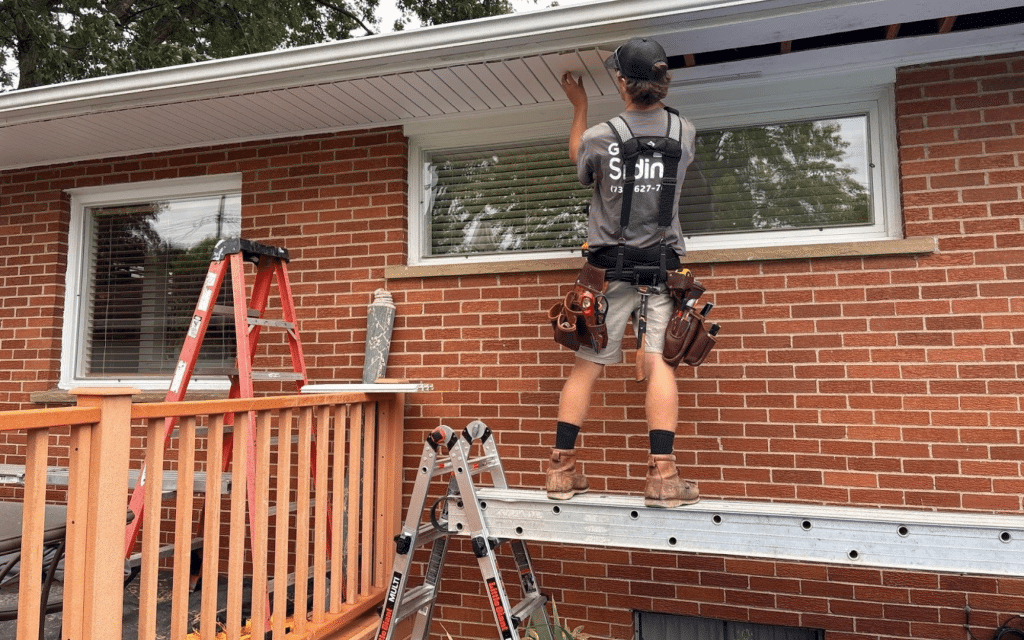
Soffit is the material that covers the underside of your roof’s overhang. Stand close to your house and look up under the eave: that horizontal panel connecting the fascia to your exterior wall is the soffit board. The word comes from a Latin term meaning “fastened below.”
What Does Soffit Do?
- Ventilates your attic. Most soffit panels are vented, allowing fresh air to enter the attic from below. This air travels up through the roof space and exits through ridge vents at the peak, preventing heat and moisture buildup that leads to mold and damaged insulation.
- Keeps moisture out. Soffit seals off the gap under the overhang, preventing rain, snow, and humidity from reaching the wood framing inside your roof structure.
- Blocks pests and insects. Without soffit, the space between your rafters and exterior wall is an open invitation for birds, bats, squirrels, and insects. A properly installed soffit board eliminates those entry points.
- Creates a finished look. Soffit covers exposed structural elements and gives the underside of your roofline a neat, uniform appearance.
Fascia vs. Soffit: A Quick Comparison
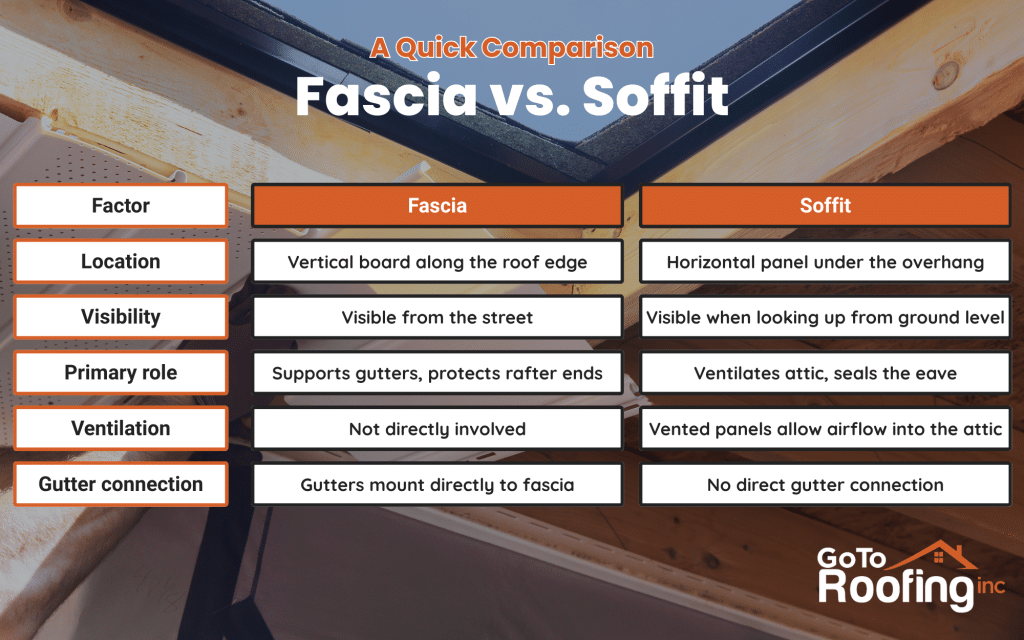
The fascia board creates the outer edge of the roofline while the soffit tucks in underneath, forming a protective enclosure around the eave that keeps your roof structure safe from moisture and pests.
Fascia and Soffit Material Options
The material you choose affects performance, appearance, and maintenance. Here are the most common options:
Wood
Wood is the traditional choice with a natural, classic appearance. It can be painted or stained to match your home’s exterior. However, wood is vulnerable to moisture, rot, and insect damage, especially at the roofline, where rain and snow exposure is constant. Wood fascia and soffit require regular painting and inspection.
Vinyl
Vinyl fascia and soffit are lightweight, affordable, and low-maintenance. They resist moisture and won’t rot or attract insects. A white fascia board is one of the most common options at home improvement stores, but vinyl comes in other colors as well. The tradeoff is that vinyl can crack in extremely cold temperatures and may fade over the years.
Aluminum
Aluminum offers superior resistance to moisture, pests, and rot compared to wood. It’s available in many colors and finishes, though it can dent from debris. Many aluminum soffit panels come with built-in ventilation perforations.
uPVC Fascia Boards
uPVC (unplasticized polyvinyl chloride) is a popular low-maintenance option. uPVC fascia boards resist moisture, won’t rot or warp, and hold their color well. They can sometimes be installed over existing timber, simplifying replacement. Some uPVC products come in styles like floating fascia boards, which create a seamless, modern look with no visible fixings.
Fiber Cement
Fiber cement handles expansion and contraction from temperature changes well and stands up to moisture, pests, and UV exposure. Its durability makes it a strong long-term choice, though it is heavier than vinyl or aluminum and requires more effort to install.
Composite Materials
Composite fascia and soffit products are also available. Composite materials blend wood fibers with synthetic polymers, resisting rot and insects without the upkeep of natural wood. Composites cost more upfront but save on maintenance over time.
Fascia and Soffit Installation: What to Know
Whether you’re replacing old boards or installing new ones, the hardware matters.
Fascia is secured to the rafter ends using a fascia screw or nail driven into the wood framing. Many contractors prefer stainless steel fascia fasteners because they resist corrosion over years of moisture exposure. Using the right screw for the material helps prevent boards from loosening.
Soffit panels slide into a channel along the wall and lock into a receiver strip at the fascia. End caps finish off exposed edges at corners and transitions. Most professional installations can be completed within a few days, depending on the home size.
Your fascia also serves as a mounting point for more than just gutters. Many people attach lights to their fascia using clips. If you plan on hanging seasonal or permanent string light fixtures, keeping your fascia board in solid condition ensures those fasteners have something sturdy to grip.
Signs Your Fascia or Soffit Needs Attention
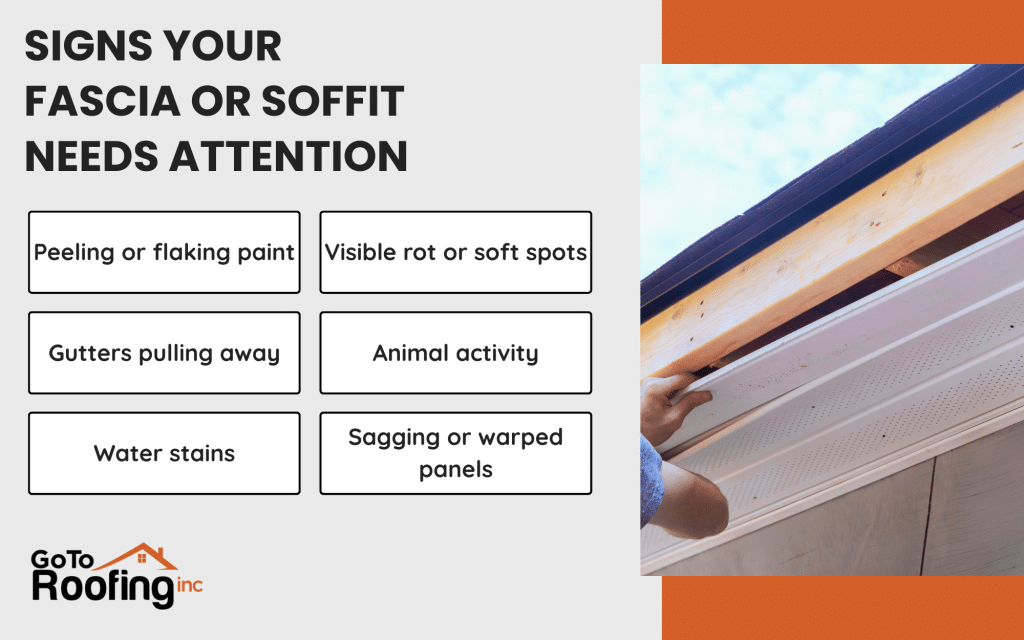
Fascia and soffit wear down over time from constant exposure to the elements. Catching problems early can save you from more expensive repairs. Watch for these warning signs:
- Peeling or flaking paint along the fascia, which often signals moisture getting into the board
- Visible rot or soft spots when you press on the fascia or soffit
- Gutters pulling away from the house, meaning the fascia behind them has weakened
- Animal activity around the roofline, including nests or scratching sounds in the attic
- Water stains on the underside of the soffit or on exterior walls near the roofline
- Sagging or warped panels, which may indicate moisture damage or failed fasteners
Clogged or damaged gutters allow water to back up and sit against the fascia, accelerating rot and decay. Keeping gutters clean is one of the simplest ways to protect your fascia board.
Why Fascia and Soffit Matter for Your Home
It’s easy to overlook fascia and soffit, but ignoring them leads to bigger problems. Damaged fascia allows water behind your gutters and into the roof deck, causing rot in the rafters and sheathing. Failing soffit cuts off attic ventilation, leading to moisture buildup and mold. Once pests find a gap in either component, they can cause significant damage inside your roof space before you even notice.
Protect Your Roofline With the Right Team
Your fascia and soffit do more work than most homeowners realize. When they’re in good shape, they keep your roof ventilated, your gutters secure, and your attic free from moisture and pests.
At GoTo Roofing, we help homeowners in Ann Arbor and the surrounding communities with fascia and soffit repair and replacement, along with roofing, siding, gutters, and windows. We stay hands-on from start to finish and stand behind our work with quality materials and clear communication. Contact us today for a free estimate.
Copyright © 2026 WebLocal, Inc.