
What Is a Roof Ridge Vent? A Homeowner's Guide to Attic Ventilation
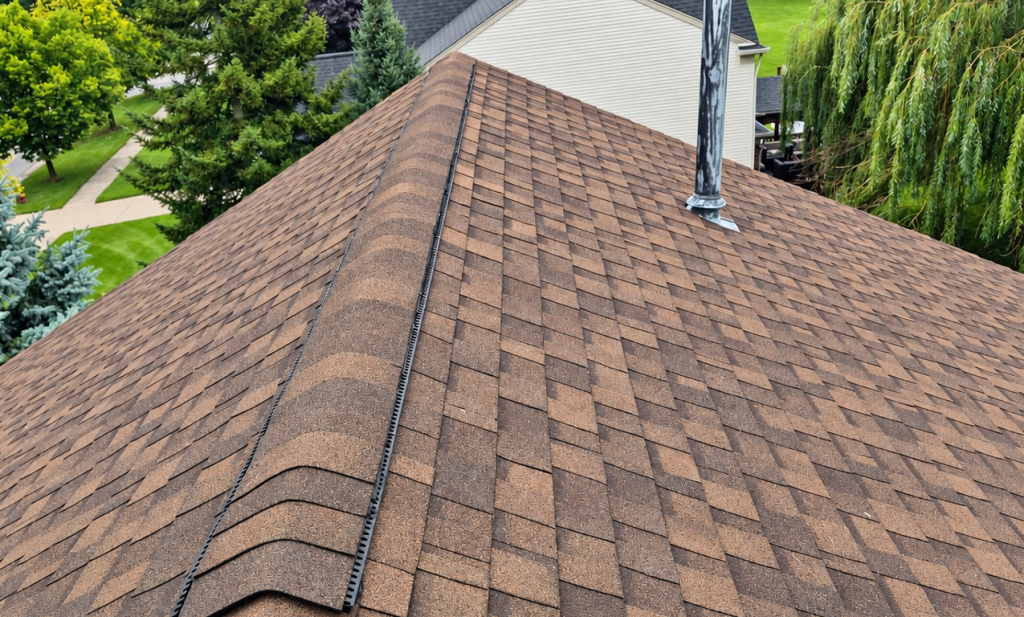
Short Answer: A roof ridge vent is a low-profile exhaust vent that runs along the peak of the roof and lets hot, moist air escape from the attic. Paired with soffit vents at the eaves that pull in fresh air, it forms a balanced ventilation system that moves air through the whole attic space. Good roof ventilation lowers attic heat, controls moisture buildup, protects your roof deck and shingles, and helps prevent ice dams in winter.
Your attic does more work than most homeowners realize. Air moves through it all day, carrying heat in summer and moisture in winter. When that air has no clear way out, it gets trapped against the roof deck and slowly wears down your roofing materials from the inside. A roof ridge vent is one of the simplest ways to give that air an exit and keep the attic healthy. This guide covers what a ridge vent is, how it works with the rest of your ventilation system, and why proper roof ventilation matters.
What Is a Roof Ridge Vent?
A ridge vent is an exhaust vent installed along the horizontal line at the peak of the roof, otherwise known as the roof ridge. During installation, the roofer cuts a slot in the roof sheathing along the ridge, then covers it with the vent and finishes the top with matching ridge cap shingles or a metal ridge vent cap.
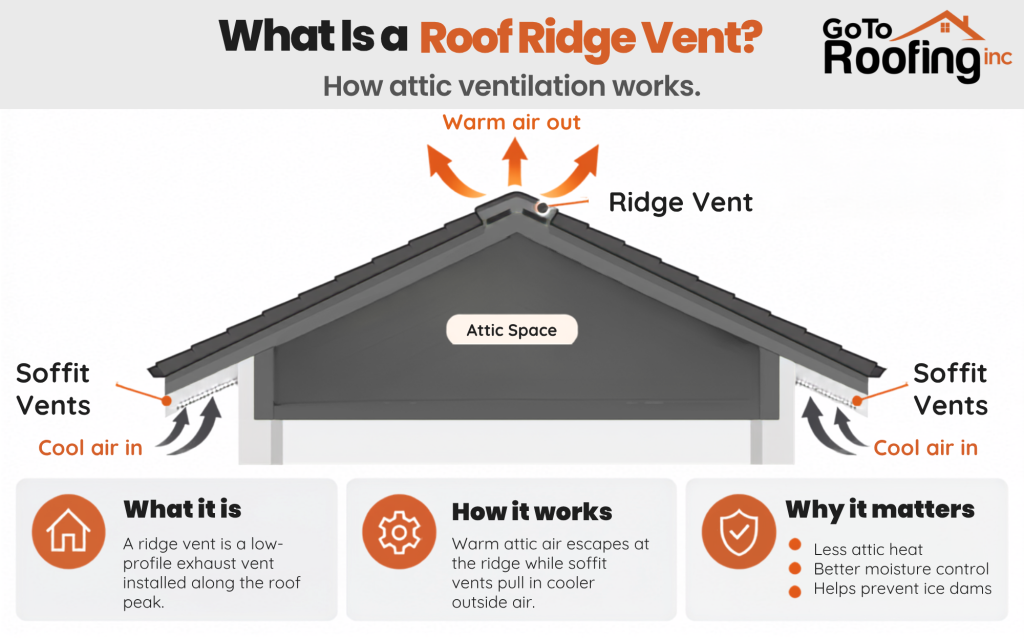
The idea behind a ridge roof vent is simple. Warm air rises. When it reaches the highest point of the attic, the ridge vent gives it a path out through the peak of the roof instead of letting it collect under the roof deck. Since the opening runs across the entire roof ridge, air escapes evenly rather than from one or two spots.
How Ridge Vents and Soffit Vents Work Together
A ridge vent cannot do its job alone. It needs intake vents down low to feed it fresh air, and that is where soffit vents come in. Soffit vents sit in the underside of the roof overhang, along the eaves. They pull cool, dry air into the attic near the bottom of the roof.
The airflow works as a steady loop. Cool air enters through the soffit vents at the eaves, warms as it rises through the attic, and exits through the ridge vent at the top. This cycle of intake and exhaust ventilation keeps air moving through every rafter bay instead of sitting still. When intake and exhaust are balanced, the whole system breathes the way it should.
Skipping the intake side is a common mistake. A ridge vent with no soffit vents has nothing to draw air from, so it moves very little air. Balanced roof vents, with intake at the eaves and exhaust at the ridge, are what make attic ventilation work.
Why Attic Ventilation Matters
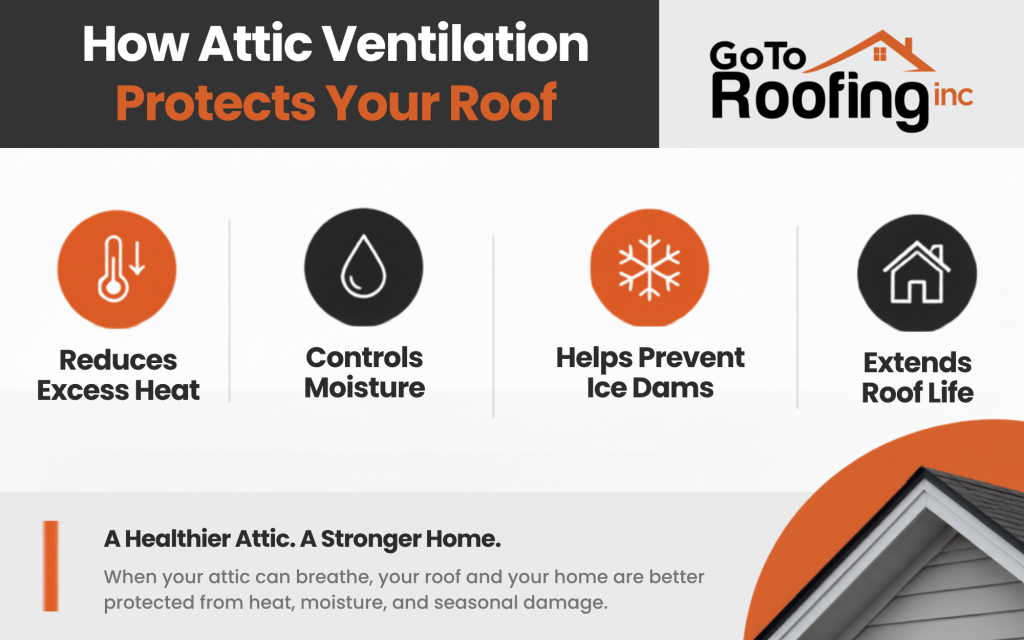
Poor ventilation shows up as bigger problems over time. Good attic ventilation protects your home from these common issues.
- Excess heat: In summer, an unvented attic traps a lot of warm air, which pushes cooling costs up and bakes your shingles from below. Steady airflow lets that excess heat escape.
- Moisture buildup: Everyday tasks such as cooking and showering send moist air up into the attic. With no way out, that moisture condenses on the roof sheathing and framing, which leads to mold, rot, and damaged insulation.
- Ice dams: In winter, warm air trapped in the attic melts snow on the roof, and the water refreezes at the cold eaves as an ice dam. Ventilation keeps the roof deck closer to the outside temperature so snow melts evenly.
- Shorter roof life: Heat and moisture together age roofing materials faster. Good ventilation helps your roof reach its full lifespan.
Ventilation also supports energy efficiency. When the attic runs cooler in summer, your air conditioner does not have to fight as hard. Building code sets a baseline for how much venting a roof needs. The International Residential Code calls for 1 square foot of net free vent area for every 150 square feet of attic floor space, split between intake and exhaust. A roofer works out the square inches of net free area your roof needs and sizes the ridge vent and soffit vents to hit that target for your roof design.
Ridge Vents vs Other Roof Vents
Not every roof uses a ridge vent, and it helps to know the options.
- Ridge vent: The exhaust vent along the roof peak. It gives even airflow and a low-profile look.
- Box vents: Square vents installed near the ridge. Several box vent units are usually needed to match the airflow of one continuous ridge vent, and they sit higher on the roof surface.
- Gable vents: Vents set into the gable end walls of the attic. They can act as intake or exhaust, but they move air across the attic rather than up through it.
For most shingle roofs, a continuous ridge vent paired with soffit vents gives the most even airflow across the entire roof. On a home with cathedral ceilings, where there is little or no open attic space, a roofer ventilates each rafter bay on its own. In cold climates, the code lets a roof use a lower amount of venting only when a vapor barrier is added on the warm side of the ceiling. The setup that fits your home depends on more than the vents alone.

Signs Your Attic May Need Better Ventilation
A few signals point to a ventilation problem worth a closer look:
- Rooms on the top floor that feel hot and stuffy in summer
- High cooling bills with no other clear cause
- Frost or damp spots on the underside of the roof sheathing in winter
- Ice dams that keep forming along the eaves after heavy snow
- A musty smell or visible mold in the attic space
If you notice any of these, a roof inspection can show whether your attic has enough intake and exhaust.
Protect Your Roof With Proper Ventilation
A ridge vent is a small part of the roof, but it quietly protects everything under it. Working with balanced soffit vents, it moves warm air and moisture out of the attic, guards your roof deck and shingles, and helps hold down energy costs all year. If your attic feels hot, smells musty, or keeps forming ice dams, your ventilation system may need attention. A quick roof repair or ventilation upgrade can turn it around.
At GoTo Roofing, we help homeowners in Ann Arbor and the surrounding communities with attic ventilation and insulation, roof repair, and full roof replacement. We stay hands-on from start to finish, install American-made, quality-guaranteed materials, and explain every step so you know exactly what your roof needs.
Contact us today for a free estimate and straightforward advice on keeping your attic and roof in good shape.
Copyright © 2026 WebLocal, Inc.