
Metal Flashing 101: Every Type of Roof Flashing and When You Need It

Short Answer: Metal flashing is a thin material installed at joints, seams, and vulnerable areas on your roof to direct water away and prevent leaks. There are many different types of flashing, and each one serves a specific purpose. Choosing the right flashing material helps create a watertight seal that protects your home from damage.
Your roof is more than just shingles or metal panels. Behind the scenes, pieces of metal flashing keep water from sneaking into gaps around chimneys, walls, skylights, vent pipes, and roof valleys. Without proper flashing, even a well-installed roof can develop leaks that lead to water infiltration and structural damage.
This guide covers what metal flashing is, the different types, the materials available, and how to keep your roofing system protected.
What Is Metal Flashing?
Metal flashing is a flat, thin material bent into shape and installed at transition points on your roof, anywhere two surfaces meet. Common locations include where the roof deck connects to a vertical wall, where a chimney passes through the roof plane, or where two slopes form a valley.
Flashing redirects water that would otherwise pool or seep into these joints, channeling it toward the gutters and off the roof. Think of it as a set of small shields placed at every weak point in your roofing system to maintain a watertight seal.
Why Roof Flashing Matters
Water always finds the path of least resistance, and every joint and angle on your roof is a potential entry point. Flashing plays a critical role in covering these gaps and directing water downward.
Without proper flashing, your roof is at risk for:
- Leaks around chimneys, skylights, and vent pipes
- Water damage to attic insulation, ceilings, and walls
- Rot in the roof deck and framing
- Mold growth inside the home
- Premature wear to roofing material and underlayment
A professional roofer will always check that flashing is in good shape during an inspection and replace it during a roof replacement.
Common Metal Flashing Types
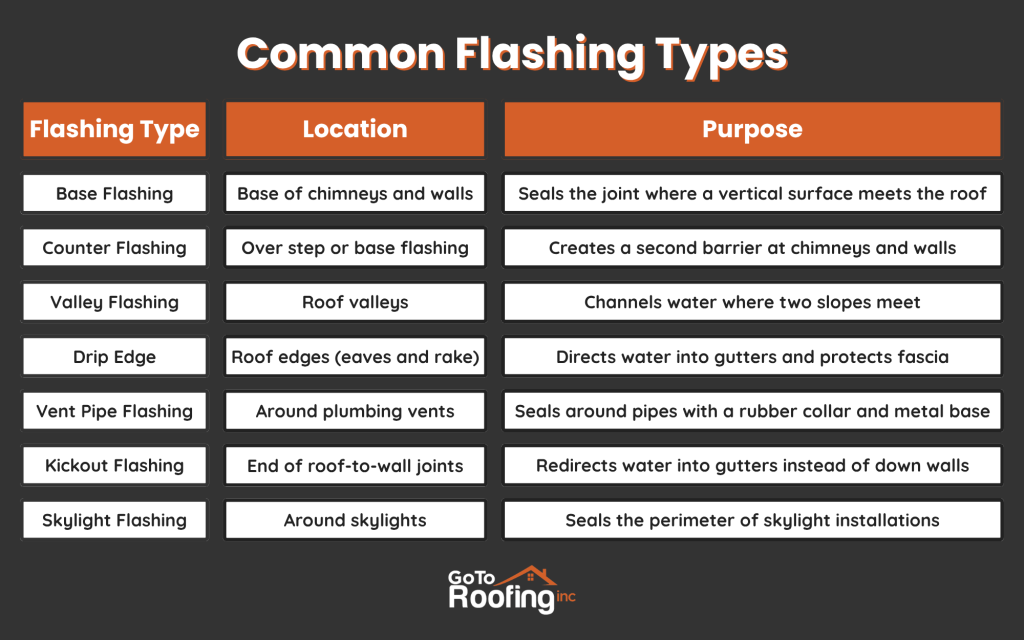
There are several flashing types, and each one is designed for a specific area of the roof.
Step Flashing
Step flashing is used where a roof slope meets a vertical wall, such as where a dormer connects to the lower roof. It consists of small, L-shaped pieces of metal layered in with each row of shingles as they go up the wall. This overlapping pattern forces water to flow down and away instead of behind the roofing material.
Base Flashing
Base flashing is installed at the bottom of a vertical surface where it meets the roof, such as along the base of a chimney, wall, or parapet. It sits flat against the roof and bends upward against the vertical surface to create a seal at that joint. Base flashing works together with counter flashing, which covers its top edge, to form a layered system that keeps water from getting behind the roofing material.
Counter Flashing
Counter flashing is installed over step flashing or base flashing, typically embedded into the mortar joints of a chimney or wall. This layered approach creates a double barrier against water, making it especially important around masonry chimneys and brick walls.
Valley Flashing
Roof valleys are the V-shaped channels where two roof slopes meet. Since water naturally flows into these low points, valley flashing is installed underneath the roofing material to channel water toward the gutters. It is typically a single continuous strip of metal running the full length of the valley. On a metal roof, valley flashing needs to be compatible with the panels to prevent galvanic corrosion.
Chimney Flashing
Chimney flashing is a multi-part system that seals the joint where a chimney passes through the roof. It typically includes base flashing along the bottom, step flashing up the sides, and counter flashing over the top. Some installations also include a cricket, a small, peaked structure that diverts water around the chimney.
Drip Edge Flashing
Drip edge flashing is installed along the edges of your roof at the eaves and the rake. It directs water away from the fascia and into the gutter system, preventing it from running behind the gutter or down the side of the house. A drip edge also protects the roof deck from moisture and gives the roofline a clean, finished look. Many local building codes require drip edge flashing on new roof installations and replacements.
Vent Pipe Flashing
Vent pipe flashing, also called a pipe boot, fits around the plumbing vent pipes that come through your roof. It consists of a flat metal base with a rubber or neoprene collar that wraps around the pipe. Over time, the rubber collar can crack from sun exposure, which is why vent pipe flashing is one of the first places a roofing contractor checks during a leak inspection.
Kickout Flashing
Kickout flashing is a small but important piece installed where a roof-to-wall joint ends above a wall. It redirects water into the gutter rather than allowing it to run down the wall surface, where it can get behind siding and cause hidden damage.
Skylight Flashing
Skylight flashing seals the perimeter where a skylight sits on the roof plane. Most skylight manufacturers include a flashing kit that uses a combination of step flashing along the sides and continuous flashing at the top and bottom. Proper installation is key to preventing leaks around this roof penetration.
Common Flashing Materials
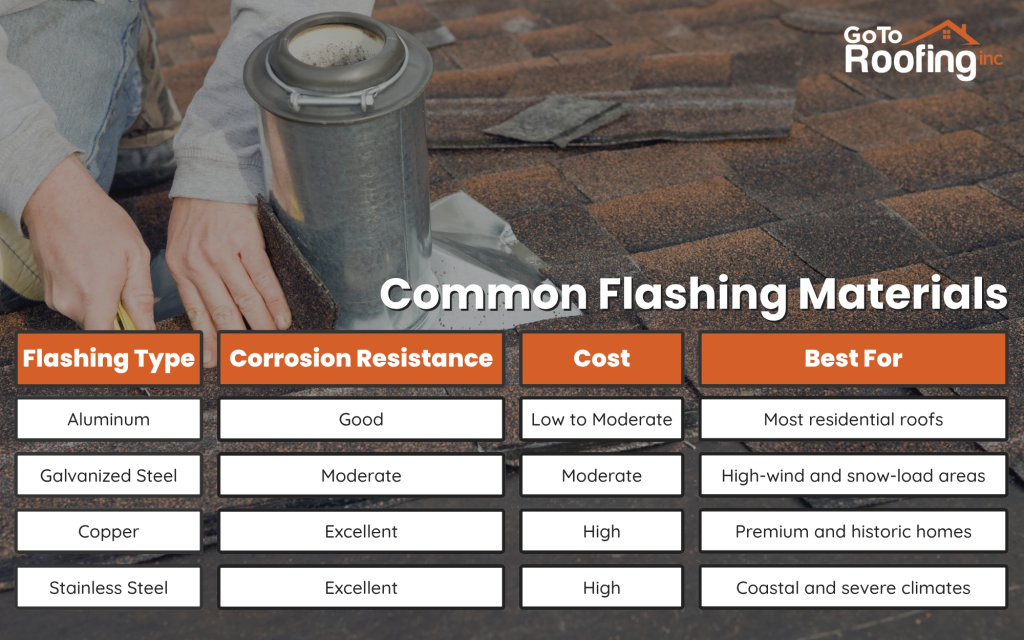
The flashing material you choose affects how well it holds up over time and whether it works with your existing roofing material. Here are the most common options.
Aluminum
Aluminum is lightweight, easy to work with, and naturally resists corrosion. It is one of the most popular choices for residential roof flashing because a roofing contractor can bend it on-site for a perfect fit. However, aluminum can corrode on contact with masonry, so it may need a protective coating in those areas.
Galvanized Steel
Galvanized steel is coated with a layer of zinc to resist rust. It is stronger than aluminum and holds its shape well, making it a good choice for areas with heavy wind or snow loads.
Copper
Copper flashing is a premium option that develops a natural green patina over the years. It has excellent corrosion resistance and can last as long as the roof itself, making it a common choice for high-end and historic homes.
Stainless Steel
Stainless steel offers strong corrosion resistance and holds up well in harsh weather and coastal environments. It costs more than aluminum or galvanized steel but is a solid long-term choice for tough conditions.
Which Flashing Material Works Best for Ann Arbor Homes?
Ann Arbor’s freeze-thaw cycles, heavy snowfall, and seasonal rain make it important to choose a flashing material that holds up year after year. For most homes in the area, aluminum and galvanized steel are the go-to options. Aluminum handles Michigan’s moisture well and is easy to shape for a perfect fit around roof features, while galvanized steel stands up to snow loads and wind. Copper is a great long-term investment for homeowners looking for a premium option, but it is not necessary for every home. Your roofing contractor can help you choose the right material based on your roof type, budget, and the specific conditions your home faces.
How to Know If Your Flashing Needs Attention
Flashing does not last forever. Temperature swings, UV exposure, and general wear can cause it to crack, lift, or pull away. Here are some signs your flashing may need repair or replacement:
- Visible rust, cracks, or gaps in the flashing
- Water stains on ceilings or walls near a chimney, skylight, or wall joint
- Missing or loose pieces of metal around roof features
- Peeling paint on exterior walls below a roof-to-wall connection
- Shingle damage or wear concentrated around roof penetrations
If you notice any of these issues, contact a roofing contractor to inspect the area. Catching a flashing problem early can prevent a much larger repair later.
Choosing the Right Flashing for Your Home
The right flashing depends on your roof type, roof pitch, local climate, and the specific roof features that need protection. A professional roofer can recommend the best combination of flashing types and materials.
- Metal roofing and metal flashing should be made from compatible metals to avoid galvanic corrosion.
- Low-slope roofs require extra attention because water moves more slowly and has more time to find gaps.
- If your home experiences harsh weather, investing in a higher-grade flashing material like copper or stainless steel can pay off over time.
Keep Your Roof Protected with the Right Flashing
Flashing may not be the first thing you think of when it comes to your roof, but it plays a major role in keeping water out. Understanding the different types of metal roof flashing helps you make informed decisions during a roof replacement or repair.
At GoTo Roofing, we help homeowners in Ann Arbor and the surrounding communities with roofin repairs and replacements that include proper flashing at every joint, edge, and penetration. We stay hands-on from start to finish, use quality American-made materials, and stand behind our work.
Ready to get your roof inspected or learn more about your flashing options? Contact us today for a free estimate.
Copyright © 2026 WebLocal, Inc.