
Fiberglass Insulation R-Value Explained

Short Answer: In construction, an R-value measures how well insulation resists heat transfer, and higher numbers mean better thermal performance. Standard fiberglass batt insulation delivers about R-2.9 to R-3.8 per inch, while high-density fiberglass batts can reach R-4.3 per inch. For Ann Arbor homes in climate zone 5, the Department of Energy recommends attic insulation between R-49 and R-60, which usually means 14 to 18 inches of fiberglass. Fiberglass remains one of the most popular insulation options in the United States because it balances solid performance, fire resistance, and a low cost per square foot.
If your home feels drafty in winter, your energy bills keep climbing, or your upstairs rooms never seem to match the thermostat, your insulation is usually the place to look first. Fiberglass insulation is the most common insulation material in American homes, and for good reason. This guide explains what R-value actually means, how fiberglass stacks up against other insulation types, and how to know if yours needs to be replaced. how to know if your home has enough.
What Is R-Value?
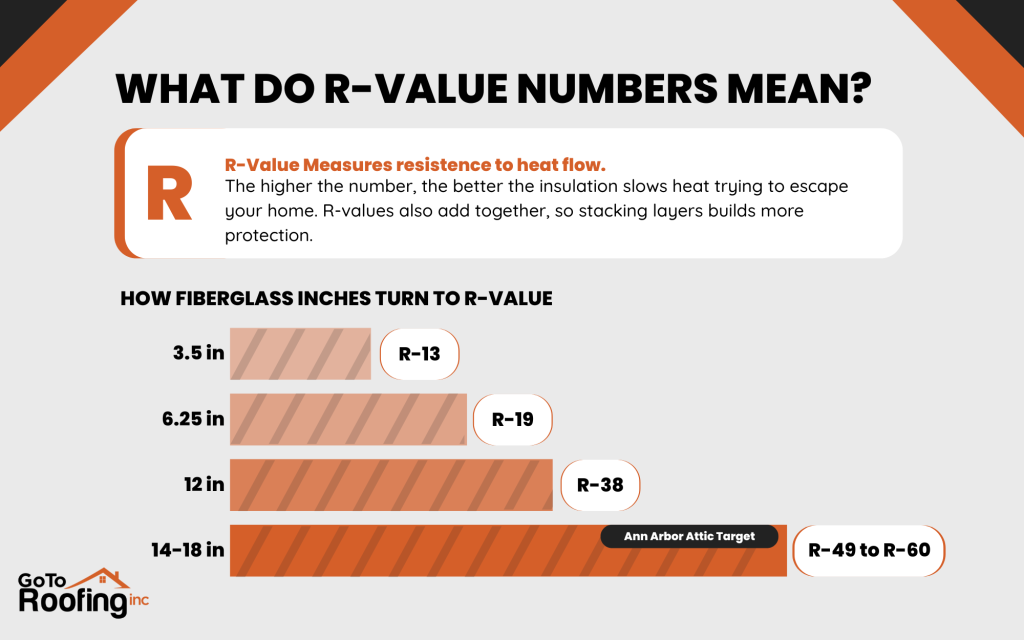
R-value is a measure of thermal resistance, or how well a material slows the movement of heat. Heat naturally flows toward colder areas, so in winter, the warm air you pay to heat is constantly trying to escape through your ceilings, walls, and floors. The higher the insulation r-value, the slower that heat loss happens.
R-value is calculated based on the temperature difference a material can maintain across its thickness. It is also cumulative, which means two layers of R-19 insulation stacked together give you roughly R-38. That is why adding more inches of attic insulation is one of the most effective upgrades for energy efficiency in an older home.
Fiberglass Insulation R-Value by Product Type
Fiberglass comes in several forms, and each one performs a little differently. Here is how the common fiberglass insulation products compare per inch of thickness.
| Fiberglass Product | R-Value Per Inch | Common Uses |
|---|---|---|
|
Standard fiberglass batt
|
R-2.9 to R-3.8
|
Wall cavity, floors, attics
|
|
High-density fiberglass batt
|
R-3.8 to R-4.3
|
2×4 and 2×6 walls needing more R-value
|
|
Fiberglass rolls (blanket insulation)
|
R-2.9 to R-3.8
|
Attics, crawl spaces, long open runs
|
|
Loose fill (blown-in) fiberglass
|
R-2.2 to R-2.9
|
Attic floors, hard-to-reach spaces
|
Batt insulation is sold in pre-cut widths sized to fit between studs and joists. Common products include R-13 and R-15 batts for 2×4 walls, R-19 and R-21 batts for 2×6 walls, and R-30 or R-38 batts for attics and floors.
Why the Same Product Can Have Different R-Values
Two fiberglass batts of the same thickness can carry different ratings because density matters. High-density fiberglass batt insulation packs more glass fibers into the same space, which traps more air pockets and slows heat transfer more effectively. That is how an R-15 batt fits in the same 3.5 inch wall cavity as an R-13 batt.
How Much R-Value Does Your Home Need?
Recommended insulation levels depend on your climate zone. Ann Arbor and most of southern Michigan sit in climate zone 5, which calls for some of the higher insulation levels in the country.
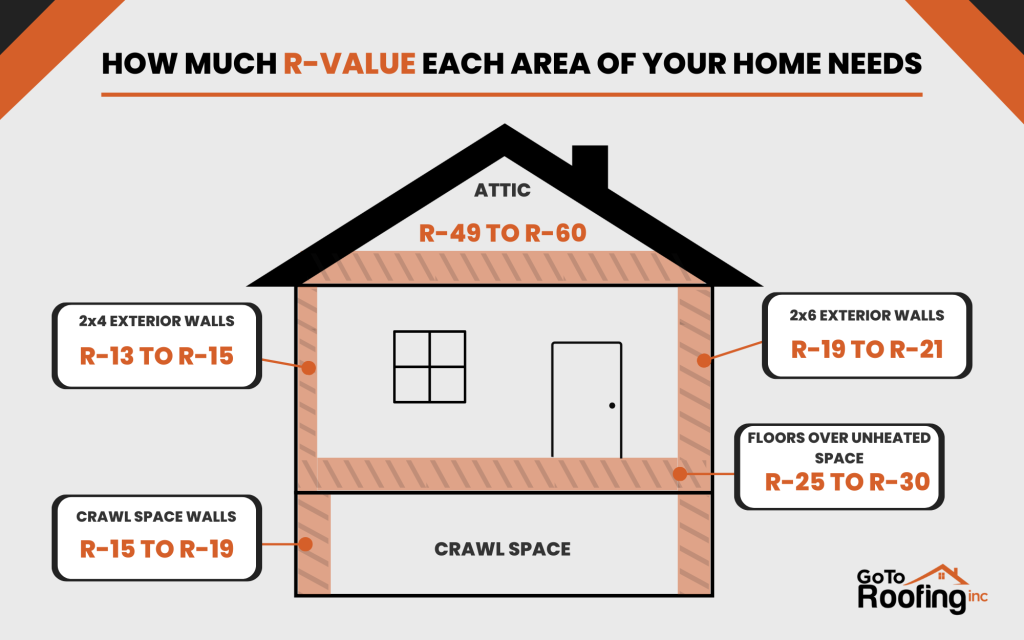
Many Michigan homes built before the 1990s have attic insulation in the R-19 to R-30 range, which falls well short of today’s recommendations. If you can see the tops of your ceiling joists when you look in the attic, you almost certainly need more insulation.
The Benefits of Fiberglass Insulation
R-value is only part of the picture. Fiberglass has stayed the most widely used insulation type in the United States for decades because of what it offers beyond the numbers.
Low Cost Per R-Value
Fiberglass delivers more thermal resistance per dollar than almost any other insulation product. Batts typically cost a fraction of spray foam insulation, which matters a lot when you are insulating an entire attic or home.
Naturally Fire Resistant
Glass does not burn. Unfaced fiberglass is noncombustible and does not require added fire-retardant chemicals the way cellulose insulation does. Kraft paper facing is flammable, so faced batts need to be covered by drywall or another approved barrier, but the fiberglass itself will not fuel a fire.
Moisture and Pest Resistance
Fiberglass does not absorb water the way cellulose can, and it will not rot, mildew, or feed mold on its own. It also holds no food value for insects or rodents. Moisture control still matters, though. Wet fiberglass loses much of its R-value until it dries, so roof leaks and poor attic ventilation can quietly undo your insulation’s work.
Sound Dampening
The same air-trapping structure that slows heat transfer also absorbs sound. Fiberglass batts installed in interior walls and floors are a simple, low-cost way to quiet a home office, bedroom, or media room.
Long Service Life
Fiberglass fits standard framing dimensions and can last 80 to 100 years when it stays dry and undisturbed. It also does not settle the way loose fill cellulose attic insulation can, so batts hold their rated thermal performance over time.
How Fiberglass Compares to Other Insulation Options
No single insulation material wins every category. Here is how fiberglass measures up against the other common choices.
| Insulation Type | R-Value Per Inch | Relative Cost | Notes |
|---|---|---|---|
|
Fiberglass batt
|
R-2.9 to R-4.3
|
$
|
Best value
|
|
Cellulose (blown)
|
R-3.2 to R-3.8
|
$
|
Good coverage, can settle over time
|
|
Mineral wool
|
R-3.0 to R-3.4
|
$$
|
Excellent fire resistance and soundproofing
|
|
Open-cell spray foam
|
R-3.5 to R-3.7
|
$$$
|
Air seals as it insulates
|
|
Closed-cell spray foam
|
R-6.0 to R-7.0
|
$$$$
|
Highest r-value per inch, acts as a vapor barrier
|
|
Rigid foam board
|
R-3.8 to R-6.5
|
$$$
|
Great for basement walls and exterior sheathing
|
Closed-cell foam insulation holds the highest r-value per inch, but it costs several times more than fiberglass. Rigid foam board shines on foundation walls and under siding. Mineral wool is a strong pick where fire resistance or sound control is the top priority. For open attics and standard wall framing, fiberglass usually offers the best return on your budget.
What Reduces Fiberglass R-Value in Real Homes
The rating printed on the package assumes a perfect installation, and real-world conditions can cut actual performance considerably. A few common problems to watch for:
- Compression: Stuffing an R-19 batt into a 3.5 inch wall cavity does not give you R-19. Squeezed fiberglass loses the trapped air that makes it work.
- Gaps and voids: Even small uninsulated gaps around outlets, pipes, and framing let heat pour through. Batts should fill each cavity completely, edge to edge.
- Moisture: Damp fiberglass performs poorly. In cold climates like Michigan, a vapor retarder such as kraft facing belongs on the warm-in-winter side of the wall to limit moisture movement into the cavity.
- Air movement: Wind washing at attic eaves and leaks in the ceiling plane both strip heat out of fiberglass. Air sealing first, then insulating, is the right order for any insulation project.
A radiant barrier can help with summer heat gain in some attics, but in a heating-dominated climate, sealing air leaks and reaching the recommended R-value do far more for year-round comfort. Professional installation from GoTo Roofing makes sure the air leaks get sealed and the right R-value gets reached, so you do not end up with gaps or shortfalls that undercut your comfort.

Signs Your Home Needs More Insulation
Not sure where your home stands? These symptoms usually point to insulation that is too thin or poorly installed:
- Uneven temperatures between rooms or floors
- Ice dams forming along the roof edge every winter
- Cold walls, floors, or ceilings you can feel by touch
- Heating and cooling systems that run constantly
- Energy costs that keep rising without a rate change
- Snow that melts off your roof faster than your neighbors’ roofs
Ice dams deserve special attention in Michigan. When heat escapes through a thin attic floor, it melts the snow above, and that water refreezes at the cold eaves. The resulting ice ridge can force water under your shingles and into the house. Bringing attic insulation up to R-49 or better, along with proper ventilation, addresses the root cause instead of the symptom.
Get the Right Insulation for Your Home
Fiberglass insulation earns its place as America’s most common insulation choice by delivering reliable thermal resistance, built-in fire safety, and a long service life at a price most budgets can handle. The key is getting enough of it, installing it correctly, and pairing it with good air sealing so every inch performs the way the label promises.
At GoTo Roofing, we help homeowners in Ann Arbor and the surrounding communities with attic insulation and ventilation upgrades that keep homes comfortable and cut heat loss year-round. We stay hands-on through the whole project, use quality materials we stand behind, and give you straightforward guidance on the right solution for your home and budget. Contact us today for a free estimate and find out what the right insulation can do for your comfort and your energy bills.
Copyright © 2026 WebLocal, Inc.